Reselling Guides
Reselling Hobby vs Business: The IRS Test That Decides
Reselling hobby vs business turns on profit motive, not sales volume or an LLC. See the IRS factors, the 3 of 5 year rule, and what each label costs you.
You flip a few things a month around a full time job, and after fees and mileage last year did not leave much. One person in a reselling group says that makes it a hobby. Another says file Schedule C and write everything off. The reselling hobby vs business question has a real answer, but it is not a dollar figure, and nobody settles it by declaring it. The IRS looks at how you actually run the thing, and the label changes what you can subtract and what you owe.
This is general information and not legal or tax advice, so confirm your own facts with an accountant or the IRS before you file.
Reselling hobby vs business: what actually decides it
The Taxpayer Advocate Service puts the split in one line: businesses operate to make a profit while hobbies are for pleasure or recreation. So the IRS business test is about intent, and since nobody can read your mind, it reads your behavior instead.
The Treasury regulation lists nine factors. It says no one factor is determinative, and it also says this is not a head count, so winning five out of nine proves nothing by itself. Here is how each one tends to look for a reseller.
| Factor in the regulation | What it looks like in reselling |
|---|---|
| Manner of carrying on the activity | Complete books, a known cost on each item, and dropping what stops making money |
| Expertise of you or your advisors | You study sold comps, or you got advice and followed it |
| Time and effort | Regular sourcing and listing hours, not an occasional weekend |
| Expected appreciation of assets | Rarely matters for fast flips, more for inventory held to rise in value |
| Success in other activities | You have built something profitable before |
| History of income or losses | Early losses are not fatal, but losses running past a normal startup stretch hurt |
| Amount of occasional profits | A small profit next to big losses says little, and a large one next to small losses says more |
| Your financial status | Substantial outside income can count against you, especially with a recreational element |
| Personal pleasure or recreation | Liking the hunt does not disqualify you if the other factors show a profit goal |
Notice what is missing. None of the nine is a sales total, and a tax form does not decide it either. The same Taxpayer Advocate tip says a Form 1099-K may be issued for money received from a hobby or a business, so getting one proves nothing in either direction.
The collector and the closet are different cases
Two sellers often get lumped in here who may not belong in the argument at all.
Selling your own used clothes for less than you paid is neither. That is a personal sale with no taxable gain, which we cover in do resellers have to pay taxes.
The collector thinning a shelf is closer to a hobby, and IRS Publication 525 addresses that one directly. If you collect stamps, coins, or similar items for recreation and sell some, the gain is taxable as a capital gain, and a loss on a sale is not deductible.
The real gray zone is reselling side income: buying things specifically to sell them, but casually, with thin records and a good job paying the bills.
What each label costs you
This is why the answer matters. Neither label is simply better.
| Business | Hobby | |
|---|---|---|
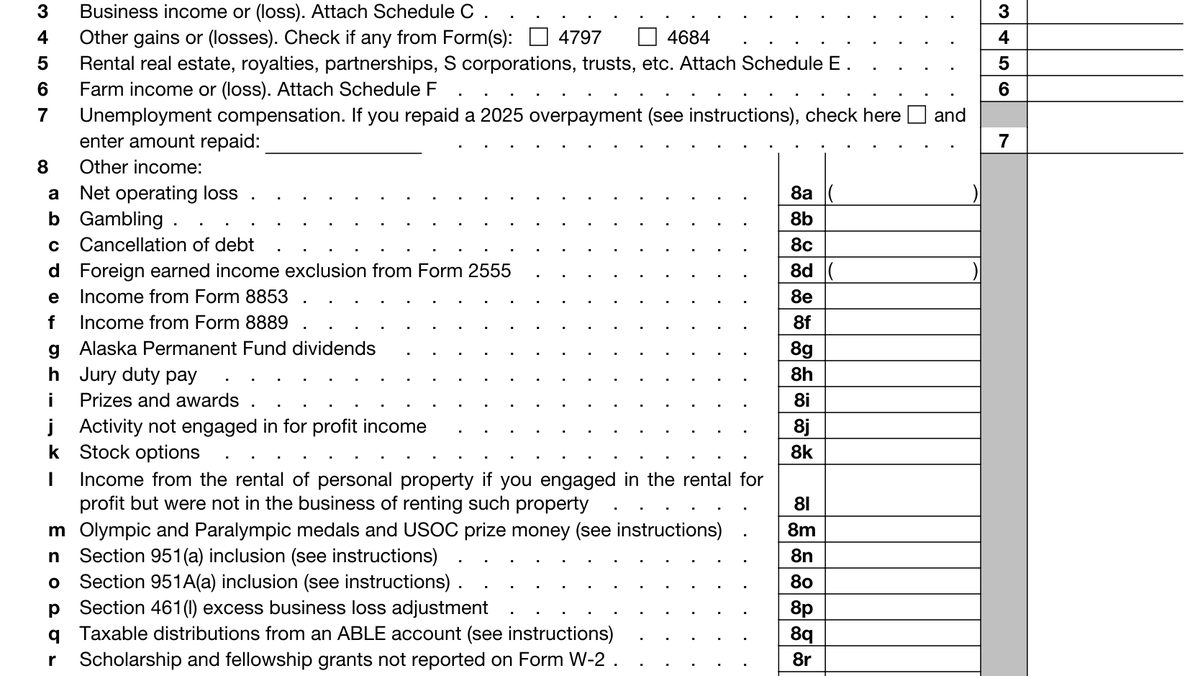
| Where income goes | Schedule C | Schedule 1, line 8j |
| Self-employment tax | 15.3 percent once net earnings reach $400 | The Form 1040 instructions treat hobby income as not self-employment income |
| What you paid for the items | Cost of goods sold | May be subtracted from gross receipts if done consistently |
| Fees, supplies, mileage | Deductible business expenses | Plan on losing them |
| A loss for the year | Can offset other income | Generally cannot |
Run some made-up round numbers to see the mechanics. These are not a real flip. Say $10,000 in sales, $4,000 paid for the items that sold, and $2,500 in fees, supplies and mileage.
| Illustration only | Business | Hobby |
|---|---|---|
| Income subject to income tax | $3,500 | $6,000 |
| Self-employment tax, before the deduction for half of it | About $495 | None |
So the hobby side avoids self-employment tax and pays income tax on $2,500 more. Which one comes out ahead depends on your bracket. That does not make it a menu, though. You report what the facts support, and picking the cheaper label without the facts behind it is the risky move.
One place the IRS's own documents do not line up: the 2025 version of Publication 525 still says hobby deductions cannot exceed hobby income and can be taken only if you itemize. A 2019 IRS tip says those expenses are miscellaneous itemized deductions and can no longer be deducted, and section 67(h) now bars those deductions for any tax year beginning after 2017, with no end date. That is why the table says to plan on losing them. Ask your preparer before counting on any of it.
The 3 of 5 year rule, and what it does not do
The law gives you one bright line. Under section 183(d), an activity is presumed to be for profit if income exceeds deductions in 3 or more of 5 consecutive tax years. Section 183 is what people mean by the hobby loss rule, and two points about this presumption get mangled constantly.
Passing is not a guarantee. The presumption holds unless the IRS establishes otherwise.
Failing is not a verdict. The regulation says no inference that the activity is not for profit arises just because you missed the presumption. You go back to the nine factors.
A newer seller without that track record can file Form 5213 to postpone the determination until the close of the fourth tax year after the first year in the activity. The deadline is 3 years after the due date of the return for that first year, or 60 days after a written IRS notice proposing to disallow deductions if that comes first. There is a price. Filing automatically extends the time the IRS has to assess tax on the activity for those years, so this is one to discuss with a preparer before you send it.
What makes the business case on paper
If you are running this to make money, the records should say so before anyone asks. Costs per item, a mileage log, and a habit of dropping what does not earn are the same things that show up in the first factor. They also make your deductions provable, and our guide to reseller tax deductions covers what those are.
A running profit record does double duty here. The reselling spreadsheet post shows the columns that matter, and it gives you the year by year numbers the 3 of 5 test asks about.
You also do not need paperwork to become a business. The IRS describes a sole proprietor as someone who owns an unincorporated business by themselves, reporting on Schedule C.
Common questions
Is reselling a hobby or a business?
It depends on whether you run it to make a profit. The IRS weighs nine factors, including how businesslike your records are, your time and effort, and your history of income or losses. No single factor decides it. Someone buying inventory to sell, tracking costs and adjusting to make money looks like a business.
How many years can you lose money reselling before the IRS calls it a hobby?
There is no fixed number. An activity is presumed to be for profit if income exceeds deductions in 3 or more of 5 consecutive tax years, but missing that test does not make it a hobby by itself. Losses in a startup stretch are not fatal, while losses that keep running past it count against you.
Can I deduct reselling expenses if it is a hobby?
Plan on no for fees, supplies and mileage. An IRS tip says hobby expenses are miscellaneous itemized deductions that can no longer be deducted, and section 67(h) bars those deductions for tax years after 2017, though Publication 525 still describes an itemized route. The regulation does allow subtracting cost of goods sold from gross receipts if done consistently.
Do I pay self-employment tax on reselling hobby income?
The Form 1040 instructions treat income from a hobby as not self-employment income, and it goes on Schedule 1, line 8j. Regular income tax still applies. A reselling business pays self-employment tax of 15.3 percent once net earnings reach $400.
Do I need an LLC for reselling to count as a business?
No. The IRS describes a sole proprietor as someone who owns an unincorporated business by themselves, and that person reports on Schedule C. An LLC does not settle the question either, because the test looks at profit motive, and Form 5213 shows the rule reaching individuals, partnerships and S corporations.
Treat it like a business before you call it one
Whichever way your facts point, the honest starting place is knowing what you actually keep on each item, and the Buy or Pass tool runs that math before you spend. A seller who checks margin before buying and drops what loses money is already showing the behavior the factors describe.
Setting up records, sourcing and pricing so the operation can stand up as a real business is much of the work inside The Income Lab.
Sources: Taxpayer Advocate Service, hobby vs. business income; 26 U.S.C. 183 and 67; Treasury Regulations 1.183-1 and 1.183-2; IRS Publication 525, Publication 334, Form 1040 instructions, Form 5213, sole proprietorships and Tax Tip 2019-85. Hero image: IRS Schedule 1 (Form 1040), public domain as a U.S. government work.