Reselling Guides
Do Resellers Have to Pay Taxes? What You Owe and When
Do resellers have to pay taxes? Yes, on profit. Income tax, the 15.3 percent self-employment tax, and the 2026 quarterly due dates, explained plainly.
The first good month of flipping feels like free money. Then someone in a Facebook group mentions the IRS, and the question lands: do resellers have to pay taxes on this, or does selling used stuff not count? The short answer is that resellers who buy to sell pay tax on their profit, and most of them owe two different federal taxes on it, not one. When you pay matters almost as much as how much.
This post is general information and not legal or tax advice, so confirm your own situation with an accountant, the IRS, or the Ohio Department of Taxation before you file.
Do resellers have to pay taxes on every sale?
No. The tax follows profit, and whether there is any profit depends on what you were selling.
Cleaning out your own closet is not a business. The IRS treats a used personal item sold for less than you paid as a sale with no taxable gain. Its Form 1099-K guidance walks through an example where a loss on a personal sale is simply entered at the top of Schedule 1 so the form amount does not get taxed. The flip side is in the same guidance: a personal item sold for more than you paid produces a gain you report on Form 8949 and Schedule D.
Buying things specifically to resell them is different. That is a business, and the IRS says to use Schedule C to report income or loss from a business you operated as a sole proprietor. Most solo resellers land there without ever filing anything to become a business.
| What you sold | How the IRS sees it | Where it goes |
|---|---|---|
| Your own used stuff, sold at a loss | No taxable gain | Top of Schedule 1 if a 1099-K reports it |
| Your own stuff, sold for more than you paid | Taxable gain | Form 8949 and Schedule D |
| Inventory you bought to resell | Business income | Schedule C, then Schedule SE |
Where the line sits between a hobby and a business is its own question, and it gets its own post in this series.
A missing 1099-K does not mean a missing tax bill
A lot of resellers wait for a form before they think about any of this. That is backwards. Platforms send a 1099-K only when your payments for goods exceed $20,000 in more than 200 transactions, and the IRS is blunt about the rest: whether or not you receive a Form 1099-K, you must still report any income on your tax return.
So the seller doing a few thousand dollars a year on eBay and Poshmark usually gets no form at all and still owes on the profit. What actually triggers a form, and why the gross number on it overstates your income, is covered in our breakdown of the eBay 1099-K threshold.
Reseller taxes come in two layers
Once reselling is a business, the profit on Schedule C gets hit twice at the federal level.
Income tax. Your net profit is added to everything else you earned that year and taxed at your normal rate. A reseller with a full time job is stacking flip profit on top of that paycheck, so it is taxed at the top of their bracket, not the bottom.
Self employment tax. This is the one that surprises people. An employer splits Social Security and Medicare with its workers. When you work for yourself, you are both sides. The IRS puts the self-employment tax rate at 15.3 percent: 12.4 percent for Social Security and 2.9 percent for Medicare.
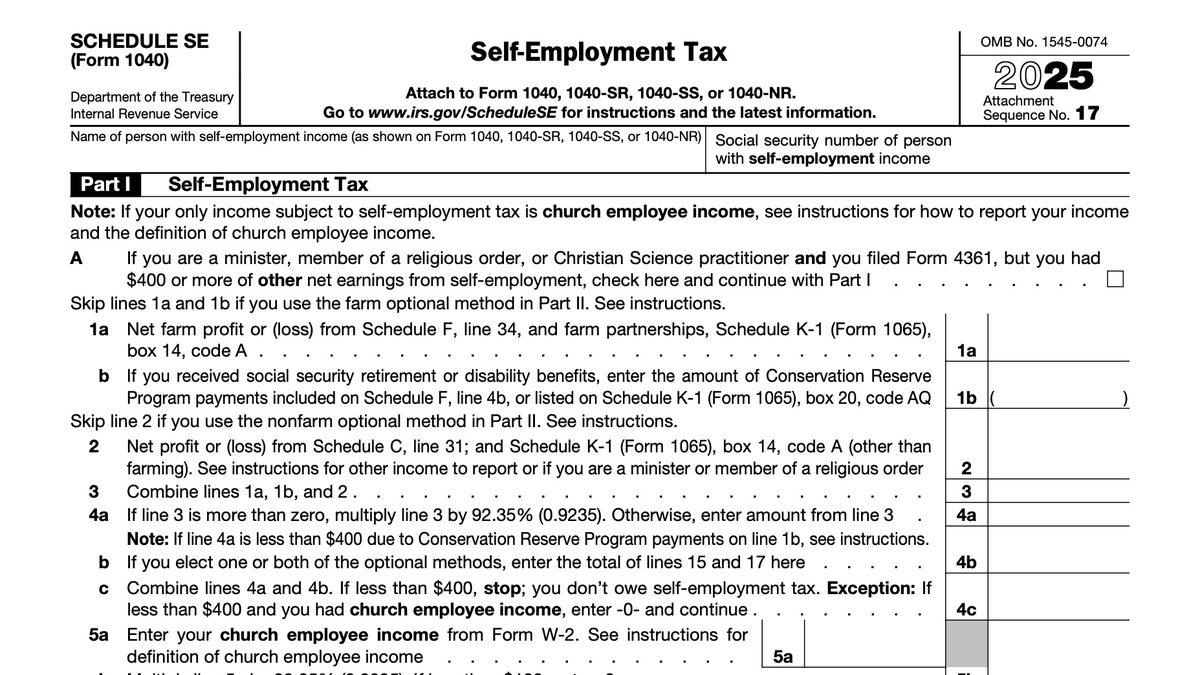
Two details soften it. Schedule SE has you multiply net profit by 92.35 percent before the rate applies, so the tax is figured on slightly less than your full profit. And you can deduct the employer-equivalent portion of the tax when you figure adjusted gross income, which trims the income tax side.
The 400 dollar line
Self employment tax has a floor, and it is low. You owe it when your net earnings from self-employment are $400 or more. The form itself spells it out: if the figure on the line after the 92.35 percent step is less than $400, stop, you do not owe self-employment tax.
Notice that the test is net earnings, not sales. A reseller who moved $9,000 of inventory but kept only a few hundred after cost of goods, fees and shipping may sit under that line. A reseller with a strong year on a small amount of volume may not. That is why the cost side of your records carries so much weight, and it is the whole subject of our guide to reseller tax deductions.
When resellers pay: quarterly estimated taxes
Nobody withholds tax from an eBay payout. The IRS expects you to pay as you go anyway, through quarterly estimated taxes.
Under the 2026 Form 1040-ES, you generally must make estimated payments if you expect to owe at least $1,000 for the year after withholding and refundable credits. You are covered if your withholding and payments reach the smaller of 90 percent of this year's tax or 100 percent of last year's. That second number becomes 110 percent if your adjusted gross income last year was more than $150,000, or $75,000 if married filing separately.
| 2026 payment | Due date |
|---|---|
| 1st | April 15, 2026 |
| 2nd | June 15, 2026 |
| 3rd | Sept. 15, 2026 |
| 4th | Jan. 15, 2027 |
The form adds one shortcut for the last one: you can skip the January 15, 2027 payment if you file your 2026 return by February 1, 2027 and pay the entire balance with it. Miss payments you were required to make and you may face an underpayment penalty, even if you pay everything in April.
There is also a quieter route for anyone with a day job. The 1040-ES instructions point out that you may be able to avoid estimated payments by asking your employer to withhold more from your paycheck. For a part time reseller, raising withholding once can be simpler than tracking four deadlines.
The Ohio side
Ohio taxes income too, and it runs its own estimated payment rule. The Department of Taxation says you should make Ohio estimated payments when your estimated Ohio tax liability, less Ohio withholding, is more than $500. The 2026 quarterly dates match the federal ones.
Sales tax is a separate obligation from all of the above. Income tax is about what you keep. Sales tax is about what your buyer pays, and in Ohio that conversation starts with whether you need a vendor's license, which we walk through in how to get an Ohio vendor license for reselling.
Common questions
Do you have to pay taxes on reselling items?
If you bought the items to resell, yes, on the profit. That profit goes on Schedule C and is subject to income tax, plus self-employment tax once net earnings reach $400. Selling your own used belongings for less than you paid is different and produces no taxable gain.
Do I have to pay taxes if I sell my own stuff on eBay?
Not on items sold for less than you originally paid. The IRS treats those as personal sales with no taxable gain, and if a 1099-K reports them, the amount is entered at the top of Schedule 1 so it is not taxed. A personal item that sells for more than you paid is a gain you report on Form 8949 and Schedule D.
Do resellers have to pay quarterly taxes?
Usually, once the business makes real money. The IRS generally requires estimated payments if you expect to owe at least $1,000 for the year after withholding and credits. The 2026 due dates are April 15, June 15 and Sept. 15, 2026, and Jan. 15, 2027. Raising the withholding at a regular job is another way to cover it.
Do I have to report reselling income without a 1099-K?
Yes. The IRS states that whether or not you receive a Form 1099-K, you must still report any income on your tax return. The form only shows up once payments exceed $20,000 in more than 200 transactions, so most small resellers never receive one.
What is the self-employment tax rate for resellers?
The IRS sets the self-employment tax rate at 15.3 percent, made up of 12.4 percent for Social Security and 2.9 percent for Medicare. It applies to net earnings from self-employment, which Schedule SE figures at 92.35 percent of net profit. The employer-equivalent portion of the tax is deductible when figuring adjusted gross income.
Set the money aside before you spend it
The resellers who get hurt by taxes are rarely the ones who owed a lot. They are the ones who spent the payout in October and met the bill in April. Knowing your real profit per item, after cost, fees and shipping, is what lets you set aside the right amount as you go, and checking that margin before you buy is what the Buy or Pass tool is for.
Tracking cost, profit and what to hold back each month is a system, not a one-time fix, and building that system is part of what we work through inside The Income Lab.
Sources: IRS, self-employment tax, estimated taxes, 2026 Form 1040-ES, Schedule SE, About Schedule C, understanding your Form 1099-K and Form 1099-K common situations; Ohio Department of Taxation, estimated payments. Hero image: IRS Schedule SE (Form 1040), a U.S. government work in the public domain.