Reselling Guides
eBay 1099-K Threshold 2026: When eBay Reports Your Sales to the IRS
The eBay 1099-K threshold for 2026 is $20,000 and 200 transactions. Here is what the form reports, what you deduct, and why profit is taxed either way.
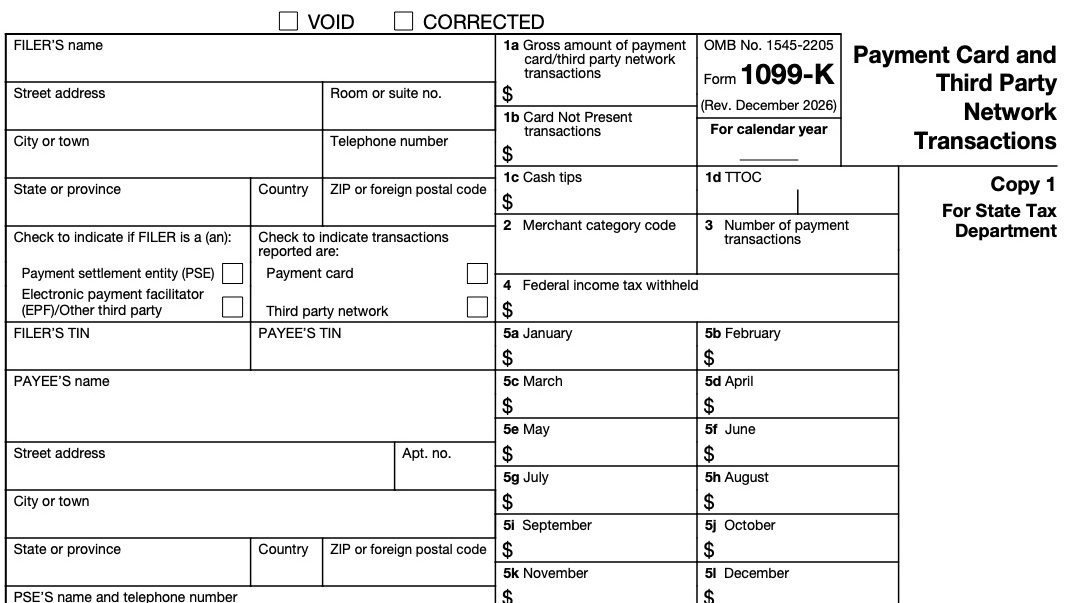
Every January the same argument goes around the reselling groups. Somebody posts a 1099-K with a number on it far bigger than anything they think they made that year, and the replies split into two camps. One says you owe nothing because you sold used stuff at a loss. The other says you owe tax on the whole number printed on the form. Both camps are wrong, and the gap between them is where new resellers lose money.
The rules moved recently, so a lot of the advice still floating around is out of date. Here is where the threshold actually sits and what the form does and does not mean.
The threshold went back up, and it is permanent this time
For years the 1099-K threshold was a moving target. The American Rescue Plan Act set it at 600 dollars, the IRS kept delaying that, and nobody could tell you with a straight face what the number would be next year.
That ended. The One Big Beautiful Bill Act, signed July 4, 2025, repealed the 600 dollar rule and put the old threshold back into the tax code with no expiration date. eBay states it plainly on its own seller page: the threshold "was permanently restored to its earlier level of $20,000 and 200 transactions."
Both bars have to be cleared, not one
This is the part people get backwards. It is not 20,000 dollars or 200 transactions. It is both, in the same calendar year.
| Your year on eBay | Gross over $20,000 | Over 200 transactions | Does eBay send a federal 1099-K |
|---|---|---|---|
| 180 sales, $23,000 gross | Yes | No | No |
| 340 sales, $14,000 gross | No | Yes | No |
| 310 sales, $26,000 gross | Yes | Yes | Yes |
| 60 sales, $3,000 gross | No | No | No |
A seller moving a lot of cheap clothing can clear 200 transactions easily and still never see a federal form. A seller doing forty high-ticket items can clear 20,000 dollars and never see one either.
The form has nothing to do with whether you owe tax
Here is the line worth committing to memory. The threshold decides whether eBay files paperwork. It does not decide whether you owe tax.
If you buy an item to resell and you sell it for more than you paid, that profit is taxable income from the first dollar. That is true at 8 sales and it is true at 800. No 1099-K in the mailbox is not the same as no tax owed, and plenty of sellers under the threshold still have a real filing obligation.
The flip side is just as true. Getting a 1099-K does not mean you owe tax on the amount printed on it, which brings us to the number itself.
What that big number on the form actually is
Box 1a is the gross amount, and gross means gross. eBay says the figure "includes all income and doesn't exclude credits, discounts, fees, refunds, etc."
Read what that sweeps in:
- The item price the buyer paid.
- The shipping the buyer paid you.
- Sales tax collected on the order.
- Money you later refunded on a return.
- Every fee eBay took before the payout ever reached your bank.
So the number on the form is larger than what hit your account, sometimes by a lot. That is not an error and it is not eBay inflating your income. The form reports payments processed. Your actual taxable number is what is left after your costs come off.
What comes off the top
You are taxed on profit. These are the ordinary costs a reseller subtracts:
| Expense | What it covers |
|---|---|
| Cost of goods | What you paid for the item at the thrift store, estate sale, or pallet |
| eBay fees | Final value fees, the per-order fee, store subscription, promoted listing fees |
| Shipping | Labels you bought, plus boxes, poly mailers, and tape |
| Refunds | Money returned to buyers, which is sitting in your gross but never stayed with you |
| Mileage and supplies | Sourcing trips, a scale, a printer, storage, within the usual rules |
Two sellers with identical 1099-K numbers can owe wildly different amounts, because one tracked cost of goods on every item and the other did not. Without records, you are arguing from memory against a number the IRS already has.
Your state may use a lower bar
The federal threshold is not the only one. eBay lists ten states that require reporting below the federal level: Arkansas, District of Columbia, Illinois, Maryland, Massachusetts, Montana, New Jersey, Rhode Island, Vermont, and Virginia.
Several of those sit far lower. Maryland, Massachusetts, Vermont, and Virginia use 600 dollars with no transaction minimum. Illinois uses 1,000 dollars and four or more transactions. New Jersey uses 1,000 dollars. For the rest, go to your state revenue department rather than trusting a number you read secondhand, including this one. States change these.
Give eBay your TIN before it costs you
One more piece of housekeeping. eBay needs a valid taxpayer ID, meaning your SSN, ITIN, or EIN, and it will ask once you make your first sale.
If you do not provide one, or if the IRS tells eBay your name and TIN do not match its records, eBay withholds from your payouts. The rate is 24 percent. That is money you eventually reconcile at tax time, but in the meantime it is gone from the working capital you were going to source with. Fix a TIN mismatch the week you learn about it.
The habit that makes this a non-event
None of this is hard if you build one habit early. Log four numbers on every item: what you paid, what it sold for, what the fees were, and what shipping cost. A spreadsheet is enough to start. Do it at the time of the sale, not in April.
Do that and the 1099-K stops being a scary envelope. It becomes a figure you check against your own records, because you already know what you made.
This is general information, not tax advice. Rules vary by state and by situation, and once you are selling steadily, an hour with a tax professional who knows resellers pays for itself.
Sources: eBay Seller Center, 1099-K and Tax Withholding FAQs; IRS, Form 1099-K (public domain, used for the image above); Avalara, One Big Beautiful Bill Act changes 1099 thresholds.