Reselling Guides
Should You Offer Free Shipping on eBay? The Math on Who Pays
Should you offer free shipping on eBay? At the same all-in price the fee is identical, so the real decision is who absorbs the label when it costs more.
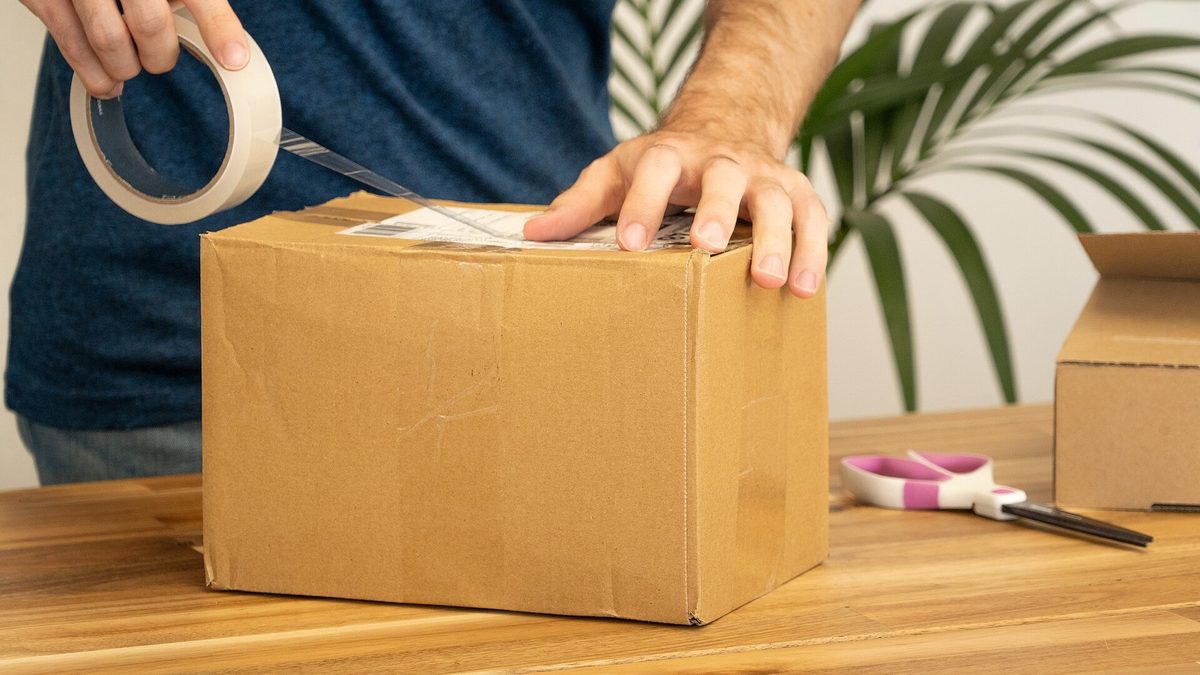
There is a toggle on the eBay listing form that asks whether you or the buyer pays for shipping, and most new sellers flip it based on a feeling. They either offer free shipping because it sounds like it will sell faster, or they refuse to because handing eBay a free label feels like giving money away. Both of those are guesses. The decision has an actual answer, and it changes item by item.
eBay takes its cut either way
Start with the fee, because it is the part people get wrong. eBay's final value fee is calculated on the total amount of the sale, and that total includes the shipping the buyer pays. For most categories the rate is 13.6 percent on the first $7,500 of an item, plus a per-order fee of $0.30 on orders of $10 or less and $0.40 on orders above $10. Those figures are on eBay's seller fees page.
Read that first sentence again. The fee is on the total, not on the item price. So charging the buyer for shipping does not route that money around eBay. It goes through the same percentage your item price does.
Same price to the buyer, same money to you
Here are two listings for the same hoodie. Both cost the buyer $30 at checkout. The label costs $8 to buy.
| Buyer pays shipping | Free shipping | |
|---|---|---|
| Item price | $22.00 | $30.00 |
| Shipping charged | $8.00 | $0.00 |
| Buyer pays | $30.00 | $30.00 |
| eBay fee (13.6 percent plus $0.40) | $4.48 | $4.48 |
| Label | $8.00 | $8.00 |
| You keep | $17.52 | $17.52 |
Identical. Not close, identical. Free shipping is not a fee penalty and buyer-paid shipping is not a fee dodge. If the buyer's all-in number is the same, your payout is the same.
That kills the most common argument on both sides of this, and it leaves the one thing that actually differs.
What you are really choosing is who absorbs the surprise
You set the price before you know where the package is going. Calculated shipping charges the buyer the real rate for their address. Free shipping locks the buyer's total and leaves the real rate on your side of the ledger.
So the question is what happens when the label is not the $8 you planned for. Same hoodie, same $22 item price with calculated shipping, same $30 free shipping listing.
| Label actually costs | Buyer-paid, calculated | Free shipping at $30 |
|---|---|---|
| $6 (close by) | $17.79 | $19.52 |
| $8 (what you assumed) | $17.52 | $17.52 |
| $11 (across the country) | $17.11 | $14.52 |
The free shipping column swings five dollars. The calculated column swings sixty-eight cents. That is the whole trade, and it is worth understanding why the calculated column is not perfectly flat: when the buyer pays $11 instead of $8, the sale total goes up, so the 13.6 percent takes a little more. You still eat a cut of the extra postage even when the buyer is the one paying it.
Notice also that free shipping is not automatically worse. On the close-by buyer it paid you the most of any cell in the table. It is more volatile, not more expensive.
When free shipping is the right call
Free shipping wins when the label barely moves. Light, flat, consistent items are the obvious case. A t-shirt costs nearly the same to send one state over as three thousand miles, so you are absorbing a swing of a dollar or two, not five.
It also buys you something the table cannot show. Buyers can filter search results to listings that do not charge for delivery, which eBay documents on its shipping rates for buyers page, and eBay's own shipping options guidance says offering free shipping or keeping delivery charges low can help win over undecided buyers. eBay does not publish a number for how much it helps. Treat it as a real but unmeasured thumb on the scale, not as a reason to eat $11 labels.
When you should make the buyer pay
Make the buyer pay when the label is heavy, bulky, or unpredictable. Anything over a couple of pounds, anything that fills a large box, anything where the distance genuinely changes the cost. Boots, jackets in big cartons, small appliances, anything long.
The failure mode here is specific and it is worth naming. You price a coat at $45 with free shipping, you budget $9 for the label, it sells to a buyer three zones away, the label is $16, and the flip you thought cleared twenty dollars clears single digits. Nothing about that is unlucky. It was priced on the cheapest possible outcome.
Low-value items need the same caution. On a $12 sale the per-order fee and a swing in postage are a much larger share of what you were going to keep than they are on a $60 one.
Set it once per item type, not per listing
Do not make this decision item by item at listing time. That is where the guessing comes back. Pick a line and apply it:
- Under one pound and flat, free shipping, with the postage already built into the price.
- Over one pound or bulky, calculated shipping, and weigh the packed item so the quote is real.
- Anything long or oversized, calculated shipping, and check the box dimensions before you buy the item, not after it sells.
Then build it into a shipping business policy so you pick it from a dropdown instead of re-deciding every time.
The one habit that makes either choice safe is weighing and measuring the item packed, in the box it will actually ship in, before you set the price. Free shipping on a guess is how you find out your margin was fictional. Free shipping on a known weight is just a price with the postage already inside it.
The takeaway
Neither option is free money and neither one is a trap. At the same checkout total they pay you exactly the same. What you are picking is whether you or the buyer carries the difference when the package has to travel further than you hoped, so carry it on the light stuff and hand it over on the heavy stuff.
That is the pricing half. The sourcing half, the part that decides whether an item was worth buying before shipping ever enters the conversation, is the system we walk through step by step inside The Income Lab.
Hero photo by Meanwell Packaging, via Wikimedia Commons, licensed CC BY 2.0.