Flip Breakdowns
Vineyard Vines Resale Value: A $5 Long Sleeve Tee That Sold for $14.39
Vineyard Vines resale value from a real eBay flip. A $5 thrifted mint long sleeve tee sold for $14.39 and cleared $7.45 after the fee.
Fee estimated at 13.5 percent; eBay had not yet returned the exact figure.
Every list of brands to look for at the thrift store has Vineyard Vines on it. The whale is easy to spot from four feet away, the shirts retail for fifty dollars new, and the name carries weight with people who shop by label.
Then you actually sell one, and the deposit is seven dollars. Both things are true at once, and understanding why is the difference between stocking the brand on purpose and being disappointed by it.
Here is the full ledger on one of them.
What this shirt actually is
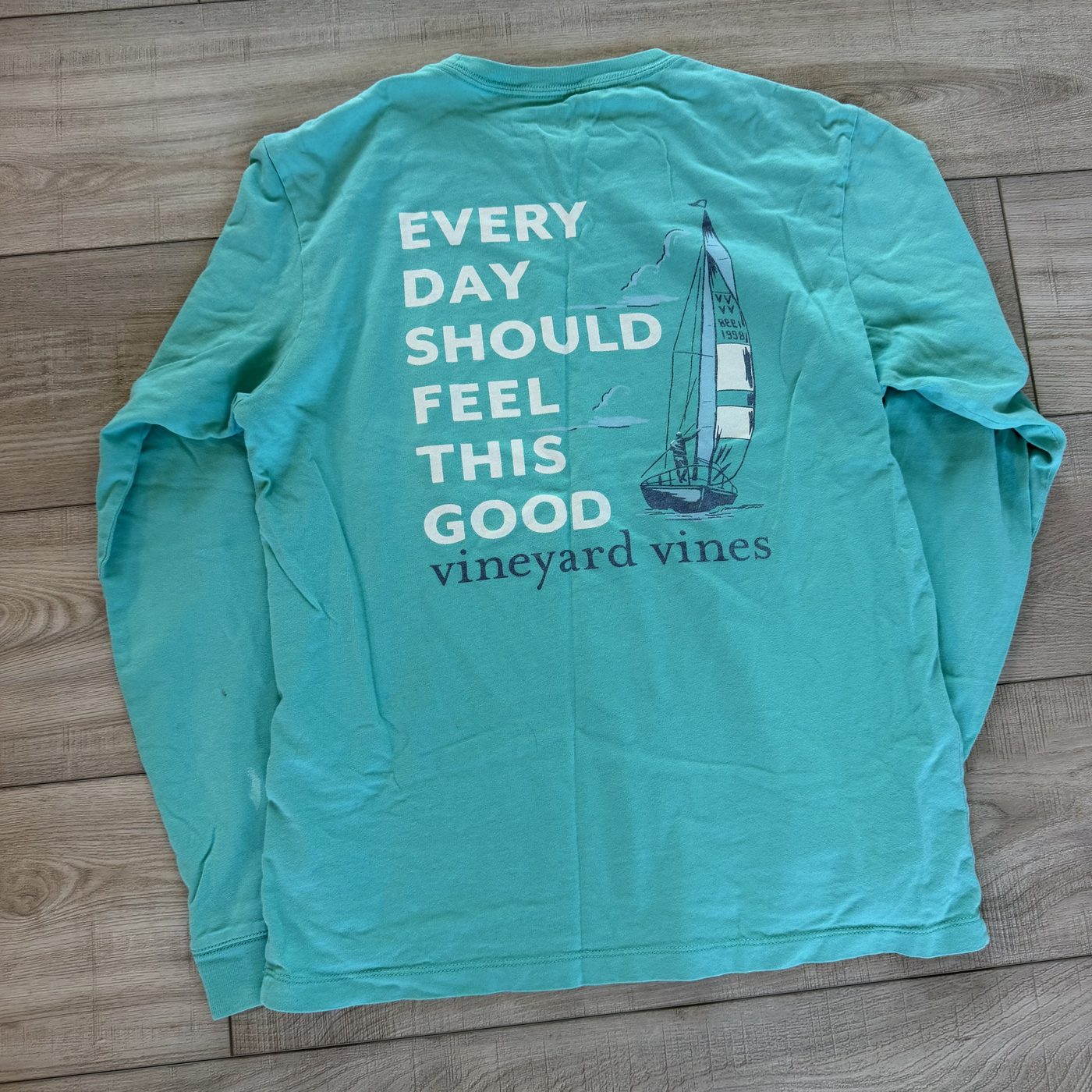
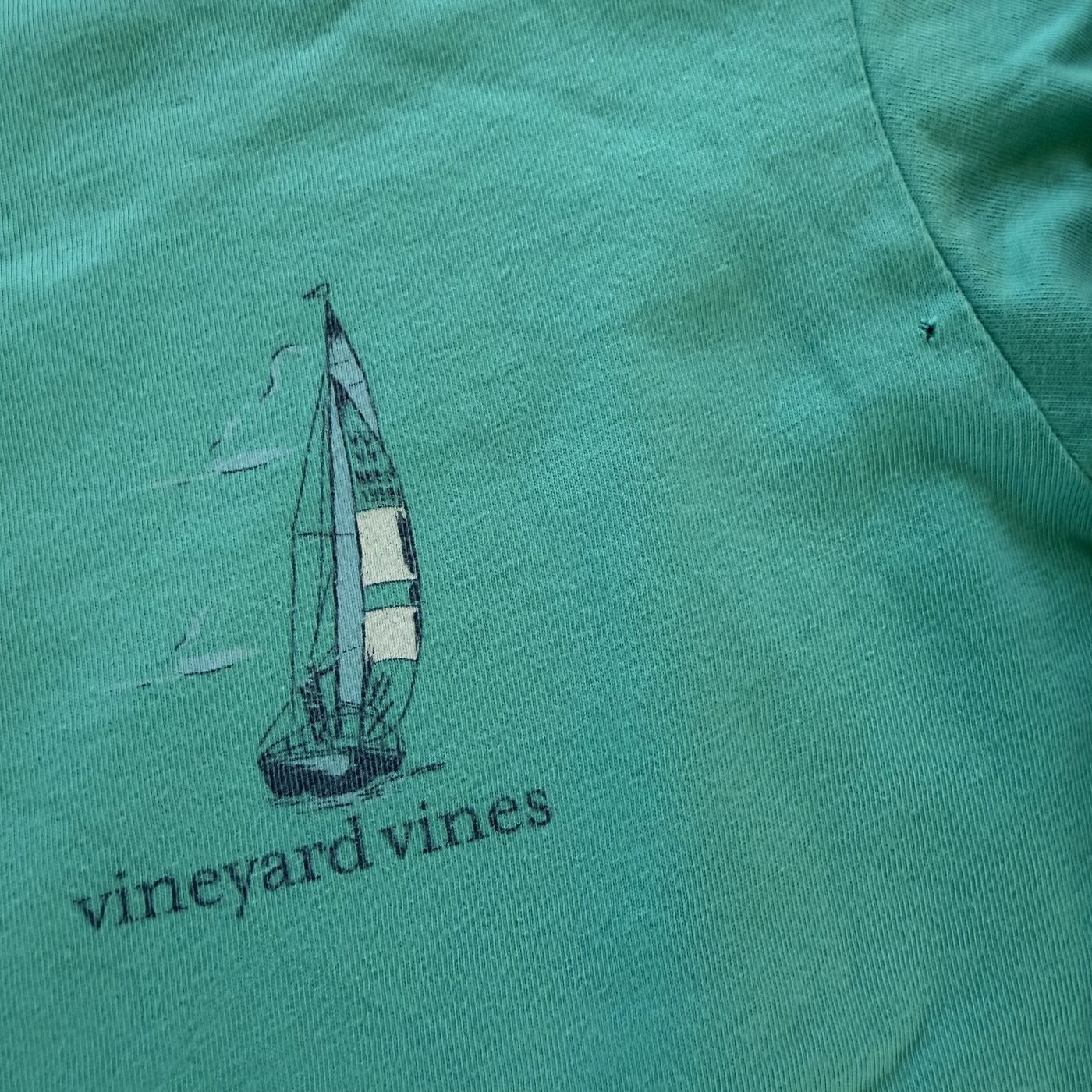
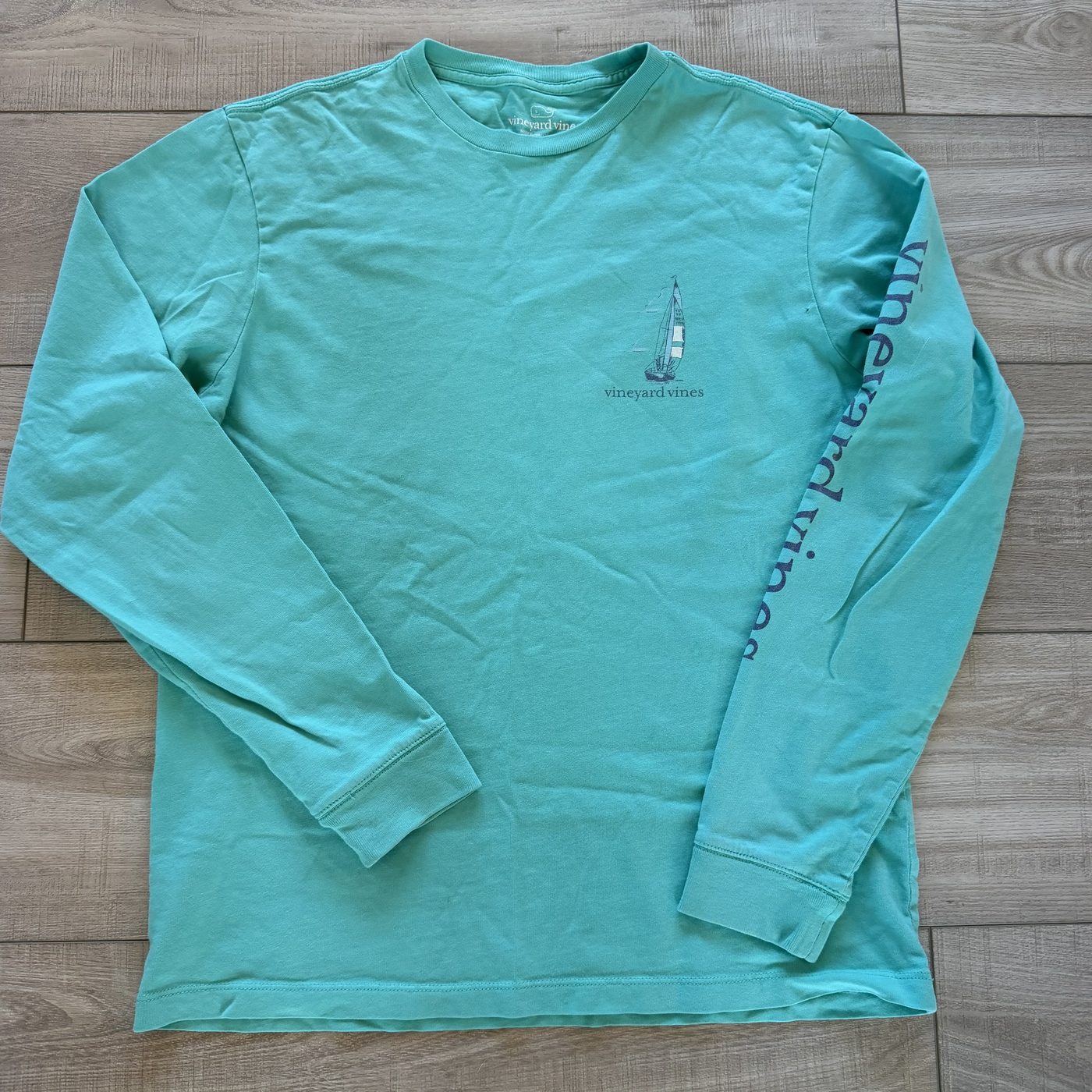
A mint green long sleeve crew neck. Small sailboat print with the vineyard vines wordmark on the left chest. The same wordmark running vertically down the right sleeve. On the back, EVERY DAY SHOULD FEEL THIS GOOD in white block letters next to a larger sailboat whose sail reads VV REG 1998.
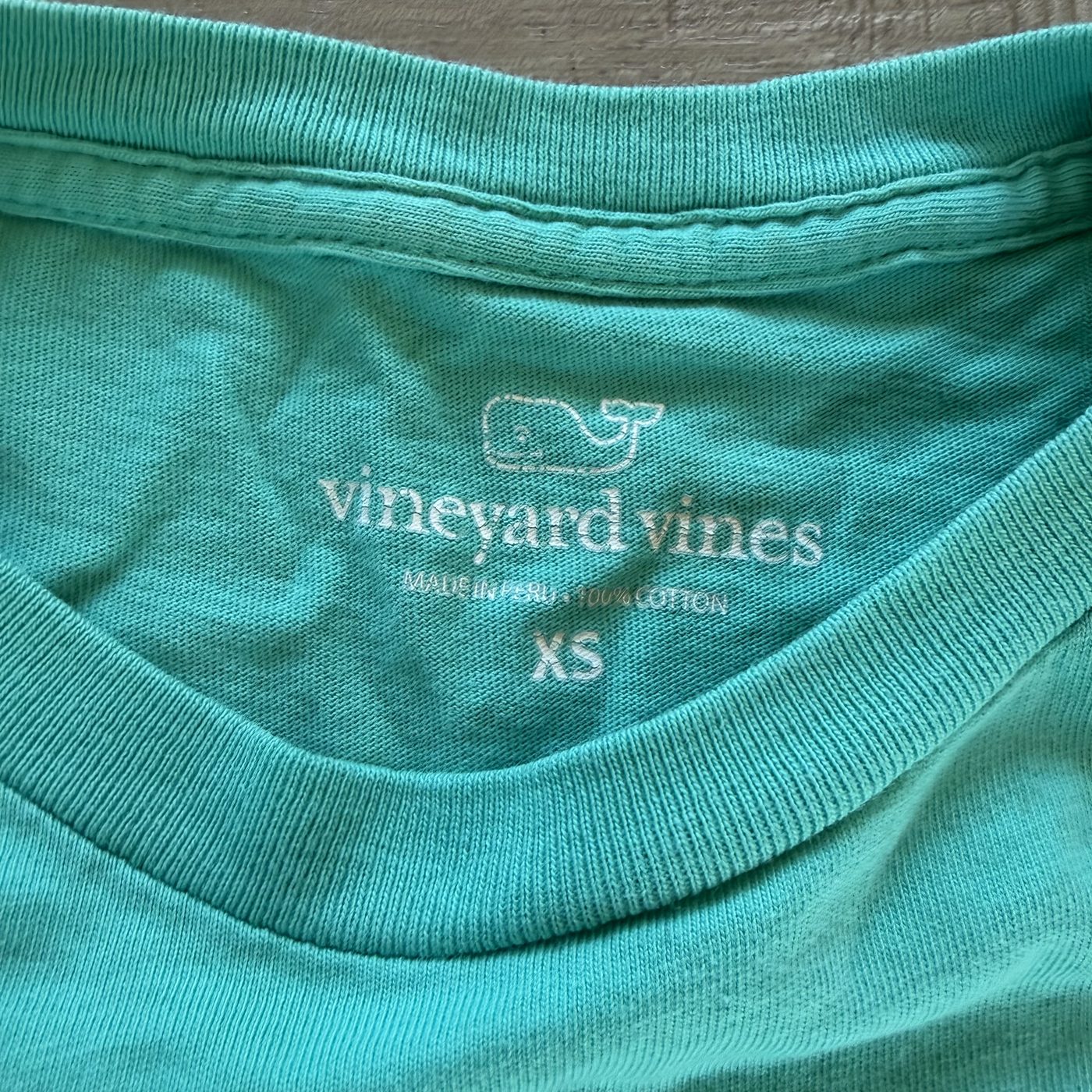
The neck tag is printed, not sewn: the whale, the brand name, MADE IN PERU, 100% COTTON, and the size. That printed tag is worth knowing by feel, because it is how current production is labeled and it is one of the fastest authenticity checks in the aisle.
The size on that tag is XS.
The brand gets you found, the size sets the ceiling
Those two facts pull in opposite directions, and the gap between them is the whole story of this flip.
Vineyard Vines does the hard half of the work for you. People search the brand by name. They search it with a color, with "long sleeve," with the back slogan. A shirt with the whale on the tag has a buyer pool before you write a single word, which is more than most of the clothing on that rack can say.
An adult XS takes most of that pool away again. It is the smallest adult size the brand cuts, and it competes with the kids and youth sizes that often fit the same person for less money. Every size narrows the audience, but XS and the very large end narrow it the most.
So you get strong search traffic and a thin slice of people who can wear it. Good discovery, small market. That combination produces exactly what it produced here.
Best Offer quietly took ten percent
It listed on August 23 at $15.99 with free shipping and Best Offer turned on. It sold on October 25 for $14.39.
That is not a coincidental number. It is ten percent under the ask, which is what an accepted offer looks like. Sixty-three days on the shelf, then somebody asked for a small discount and got it.
On a hundred dollar item, giving up ten percent is annoying. On this one it is $1.60 out of a $9.39 gross spread, so roughly seventeen percent of the margin walked out the door in a single click. That is the part people miss when they leave Best Offer on by default across a whole store.
It is still the right setting here. A $15.99 shirt that sits forever earns nothing, and the offer is what closed it. But if you run hundreds of low-ticket listings, price with the discount already assumed instead of discovering it at payout.
The numbers
| Line | Amount |
|---|---|
| Listed price | $15.99 |
| Sold price | $14.39 |
| Source cost | $5.00 |
| eBay fee (estimated 13.5 percent) | $1.94 |
| Net profit | $7.45 |
The fee is an estimate at 13.5 percent, because eBay had not returned the exact figure on this order yet. That is the standard final value rate in this category, so it is the number to plan around until the real one posts.
Five dollars in, $7.45 out, sixty-three days between.
What a seven dollar flip is for
Nobody builds a business on $7.45. What items like this do is fill the space between the good finds.
A cotton tee ships in a poly mailer for almost nothing, carries no breakage risk, and takes four minutes to photograph and list. The buy cost is low enough that being wrong about it costs you a cup of coffee. Twenty of these a month is a hundred and fifty dollars that required no extra sourcing trips, because they were already on the racks you were walking anyway.
The mistake is pricing one like it is a jacket. Check the tag before you decide how much work to put in:
- Read the size first, not the label. A Vineyard Vines XS and a Vineyard Vines L are not the same item economically, even in the same colorway.
- Check the prints before the fabric. The chest and sleeve graphics are what the buyer is paying for. Cracking, lifting, or a washed out sail drops the shirt to clearance.
- Look at the underarms and the cuffs. Light colors like this mint show yellowing and grime there first, and that is the flaw that comes back as a return.
- Keep the back graphic in the photos. The slogan is a search term people type word for word.
This one was clean on all four, which is why it sold at all rather than sitting until it got donated back.
The honest read on the brand
Vineyard Vines is worth picking up at five dollars. It is not worth paying ten for unless the size is in the fat part of the curve, the graphic is sharp, and the piece is outerwear or a quarter zip rather than a tee.
Treat the whale as a signal that the item will get found, then let the size and the condition tell you what it will actually bring. The label gets the clicks. The rest of the tag decides the deposit.
The sourcing runs that produce shirts like this one, and the better finds sitting next to them, get filmed. You can watch those on the channel.