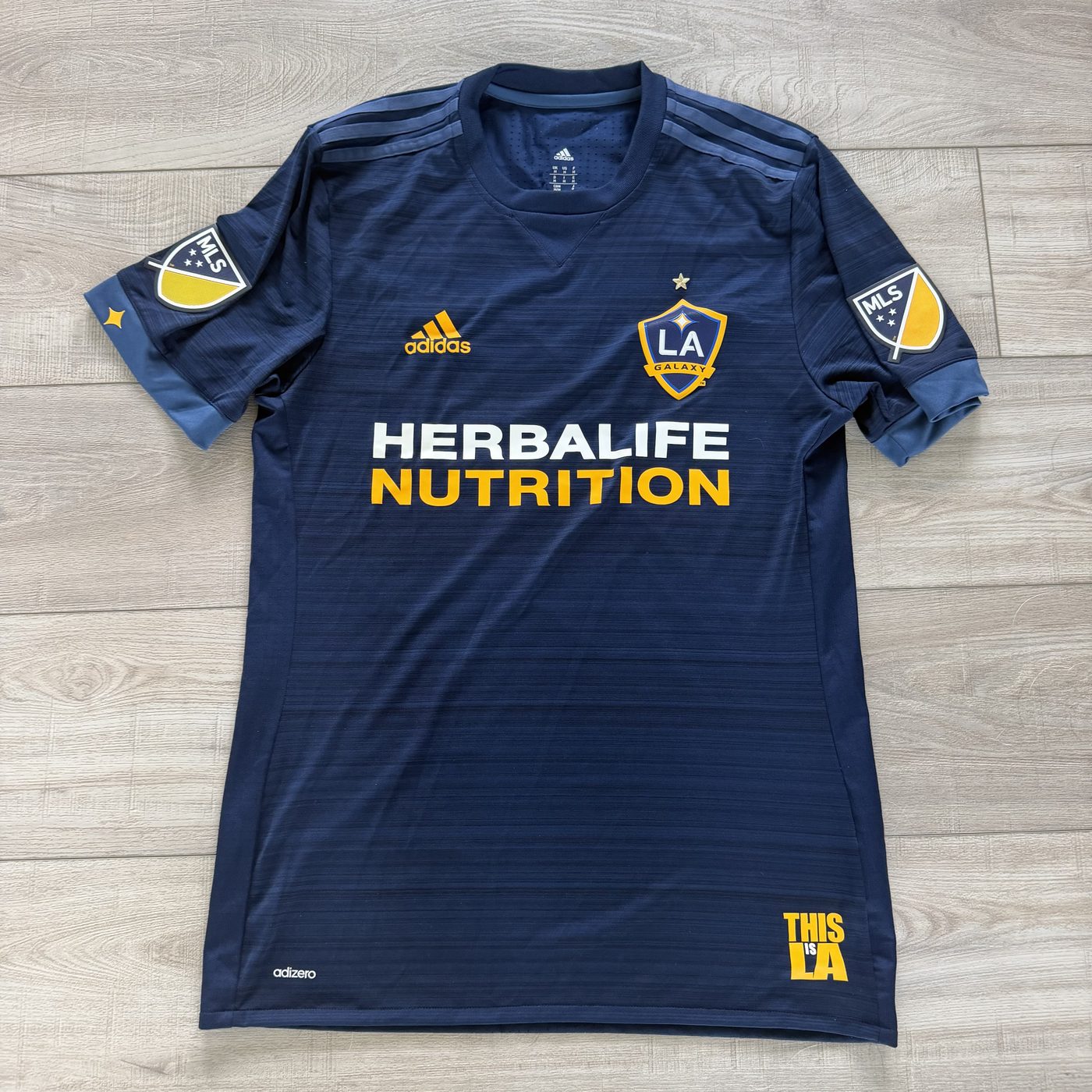
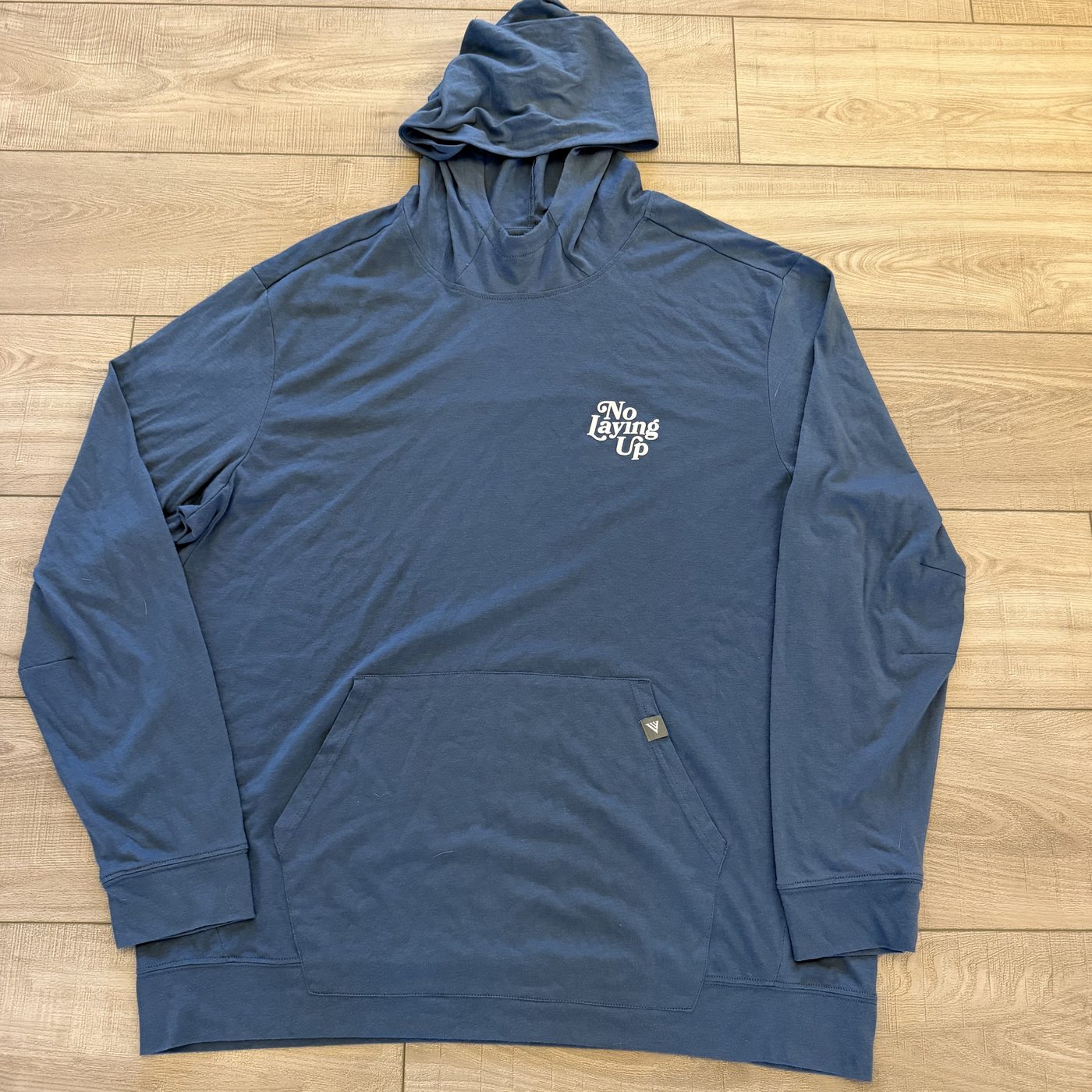
Flip Breakdowns
Stitched NFL Jersey Resale Value: A $5 Super Bowl XLV Packers Jersey That Sold for $53.99
Stitched NFL jersey resale value from a real eBay flip. A $5 Reebok Super Bowl XLV Packers jersey listed at $59.99, sold for $53.99, and cleared $41.70.
Fee estimated at 13.5 percent; eBay had not yet returned the exact figure.
Every thrift store in a football state has a wall of NFL jerseys, and most of them are worth about four dollars. They are the mall replicas: team colors, a number printed on with heat and vinyl, edges already peeling at the corners.
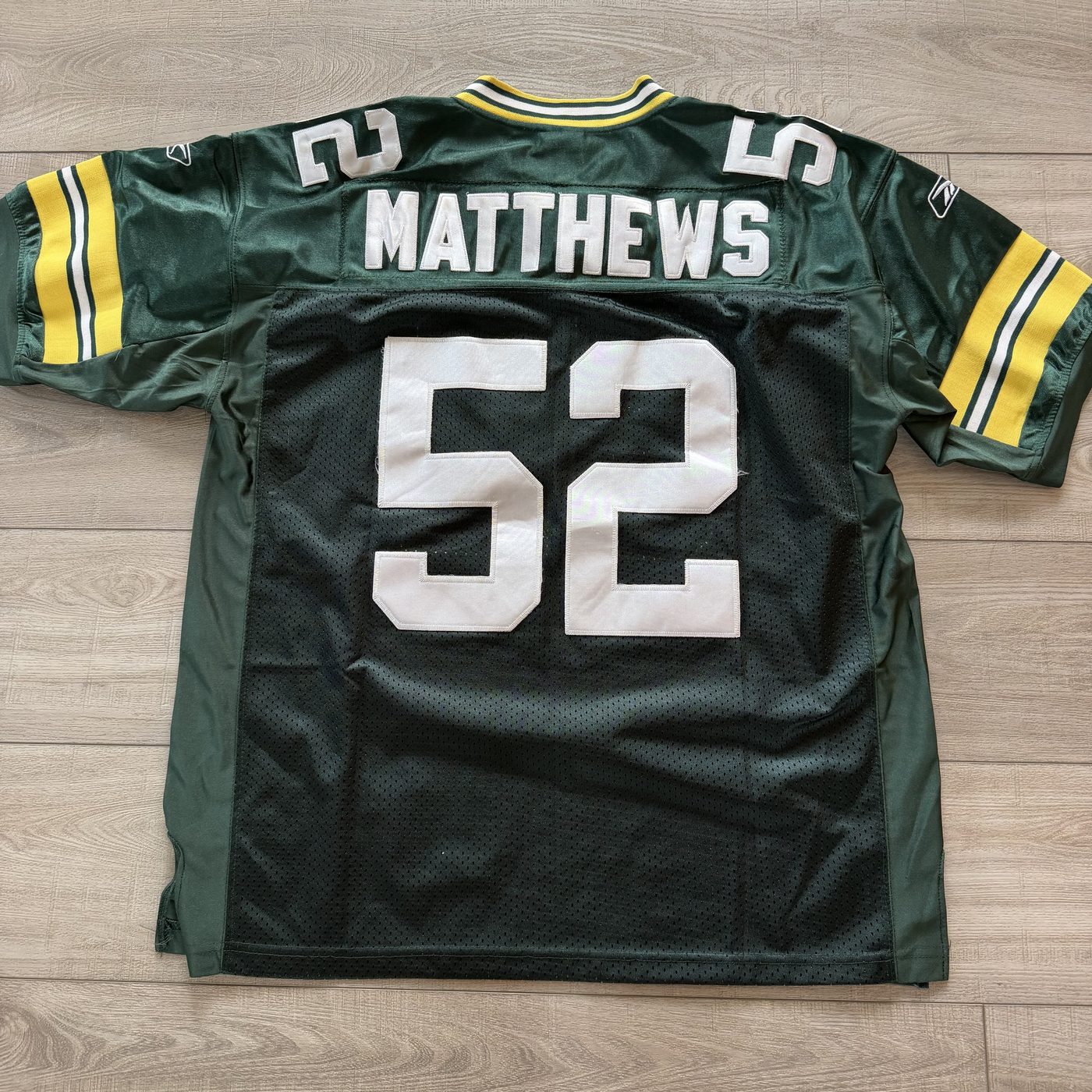
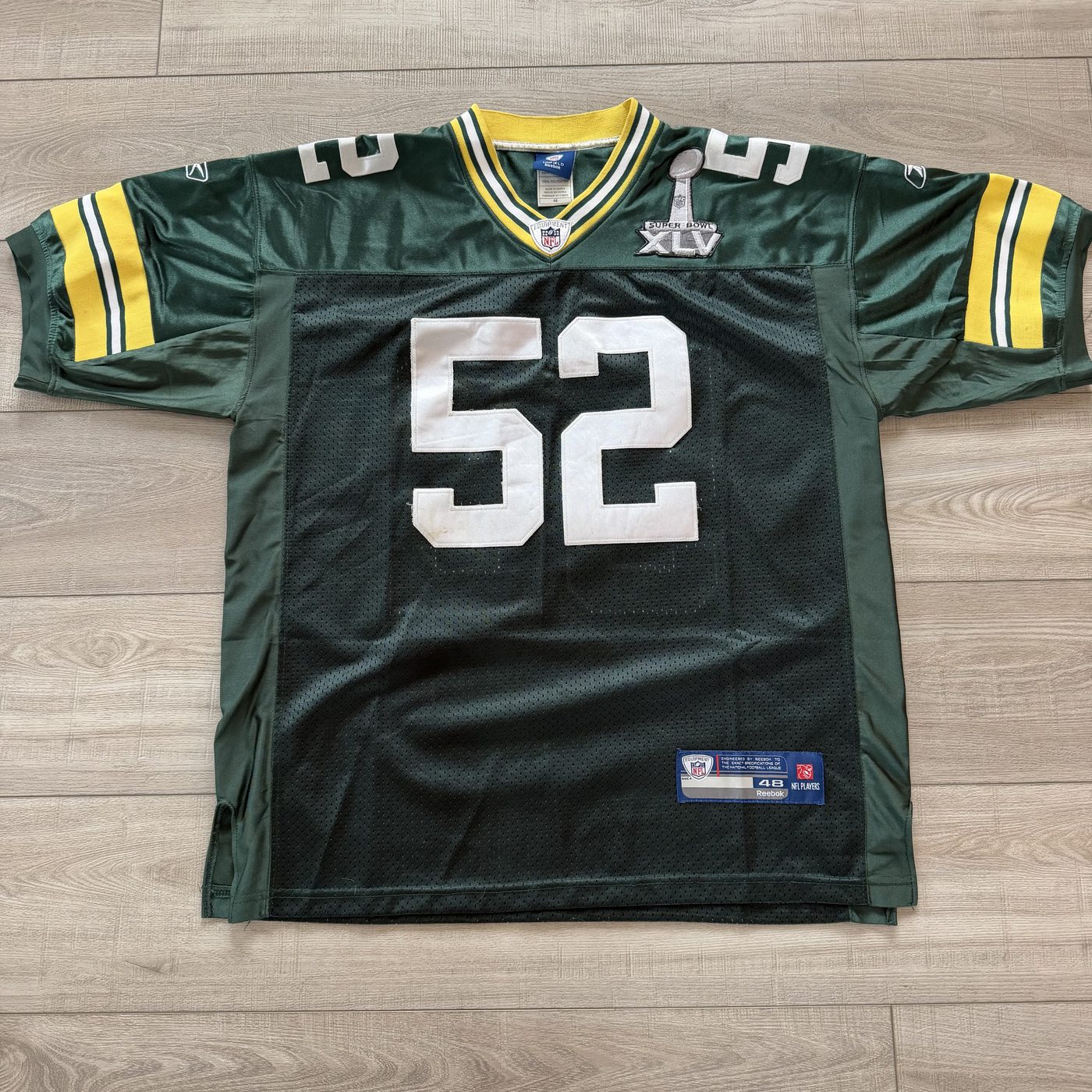
This one was on the same rack at the same five dollar price. Green Bay, Clay Matthews, number 52, size 48. It sold on eBay for $53.99.
The difference between the four dollar jersey and the fifty dollar jersey is not the team and it is not the player. It is how the numbers are attached, and you can settle that question in about six seconds while you are still standing in the aisle.
Turn it inside out before you decide
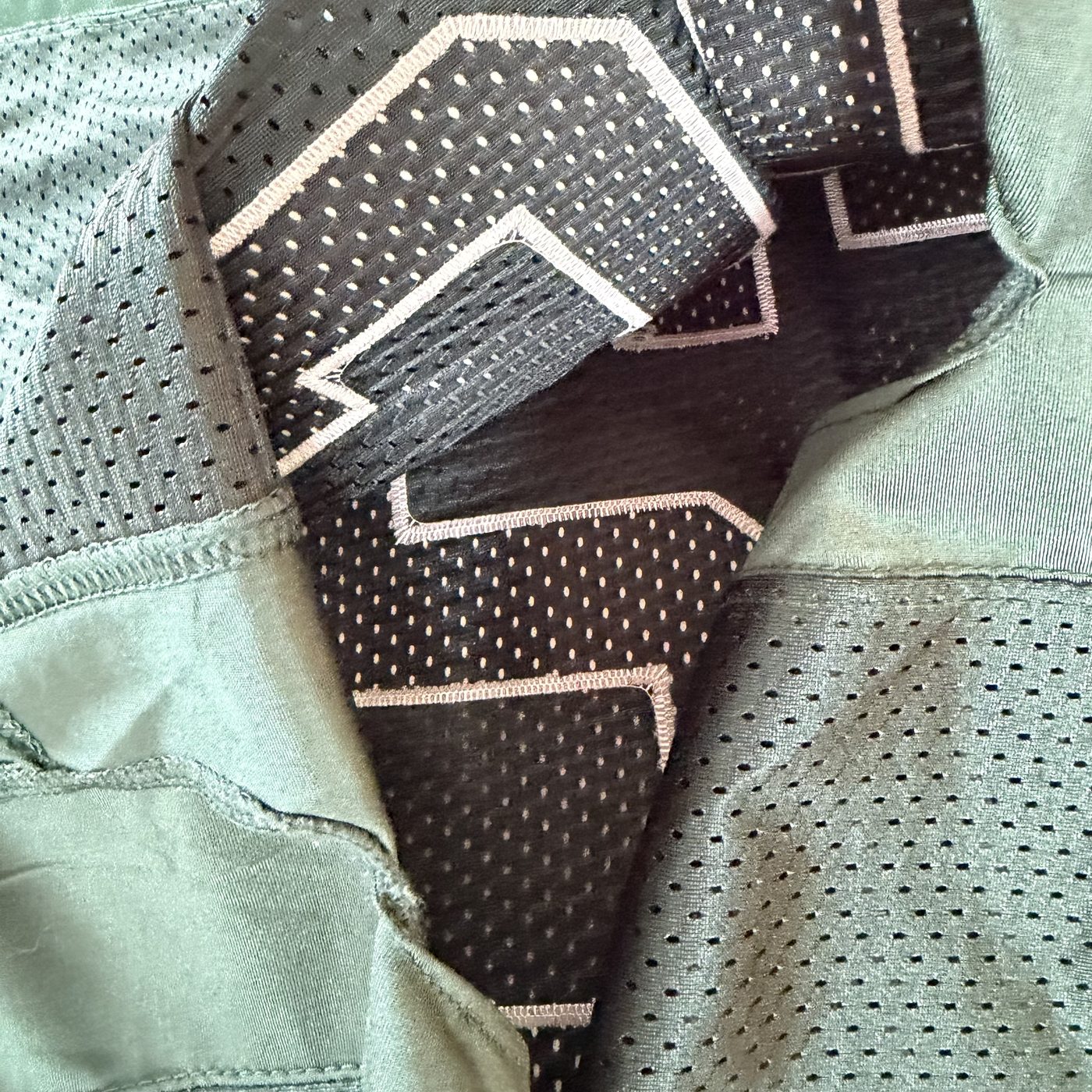
A printed number is one layer. Heat press vinyl sits on top of the fabric, it has a faint plastic sheen, and when you flip the jersey over there is nothing on the back of it. Just blank mesh.
A sewn jersey is built differently. The numbers are cut from twill cloth and stitched on, usually two layers deep with a white outline over a colored base. Turn it inside out and you see the proof: the back of the twill showing through the mesh, ringed by a continuous line of stitching that traces every corner of the digit.
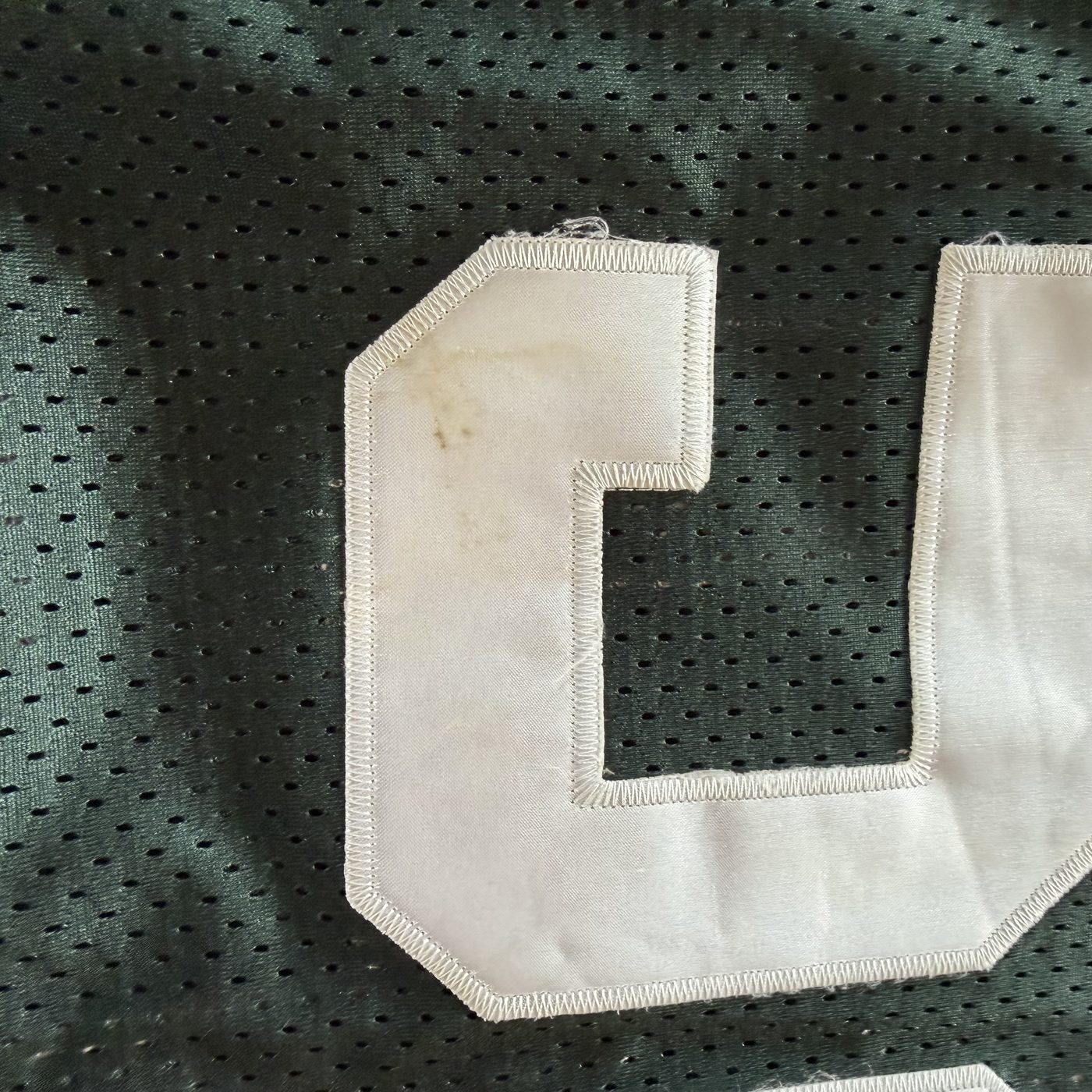
That is the third photo above. The inside of the number 52, stitch line unbroken all the way around. No glue, no backing sheet, no iron-on film.
That one check is most of the work. Sewn twill means a higher retail tier when the jersey was new, and the resale market follows the same ladder. It also tells you the item is intact rather than repaired, because loose twill letters and re-stitched nameplates are the common failure on a used jersey and they show up immediately from the inside.
The patch is the part that makes it searchable
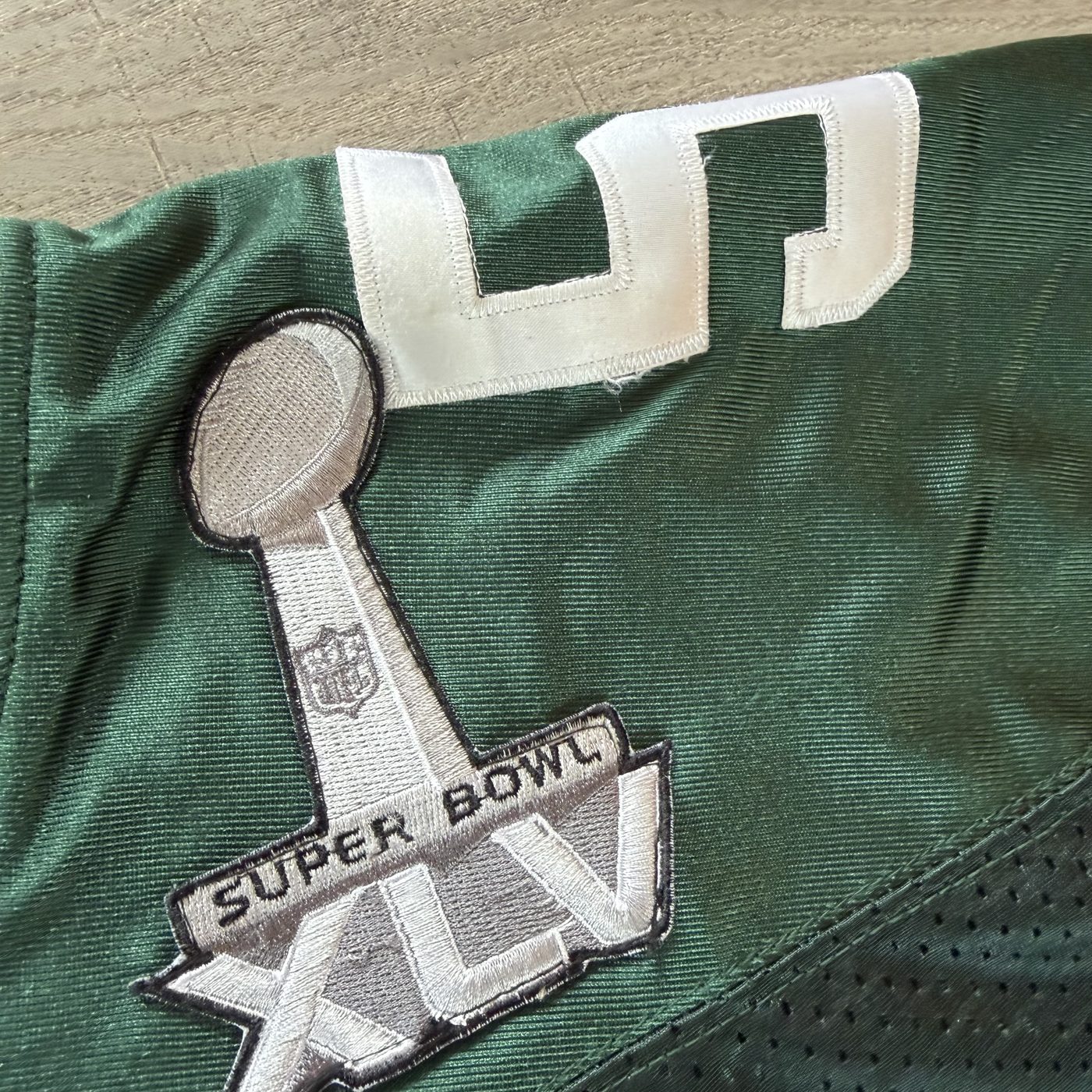
The second thing going on here is the Super Bowl XLV patch embroidered on the front chest, which dates the jersey to the 2010 Green Bay team that won that game in February 2011.
A patch like that does two jobs. It narrows the item to one season instead of one decade, and it gives a buyer an exact phrase to type. Somebody hunting a generic Packers 52 jersey has hundreds of listings to scroll. Somebody who wants the Super Bowl XLV version is looking for a much smaller pile, and that is the search you want to be sitting in.
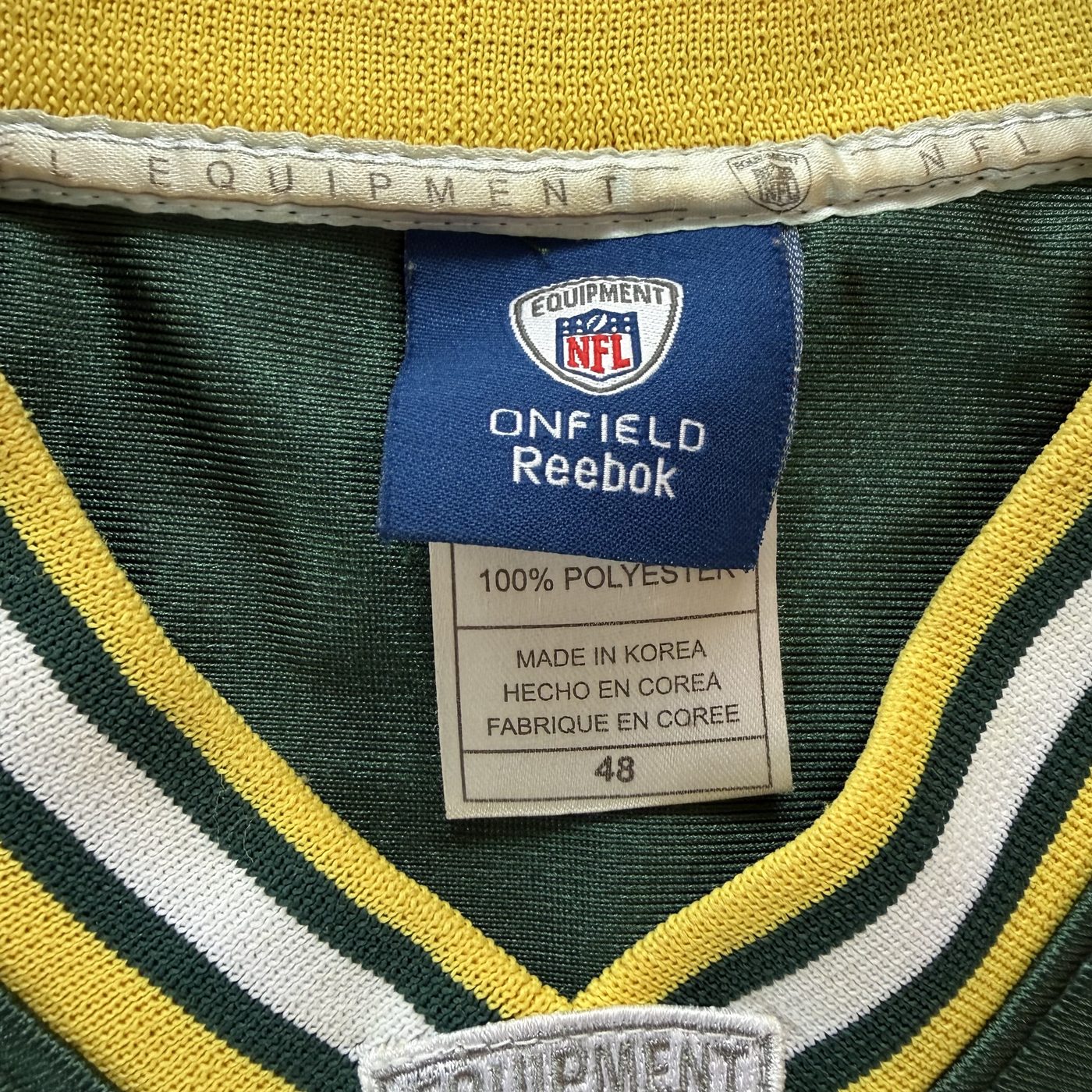
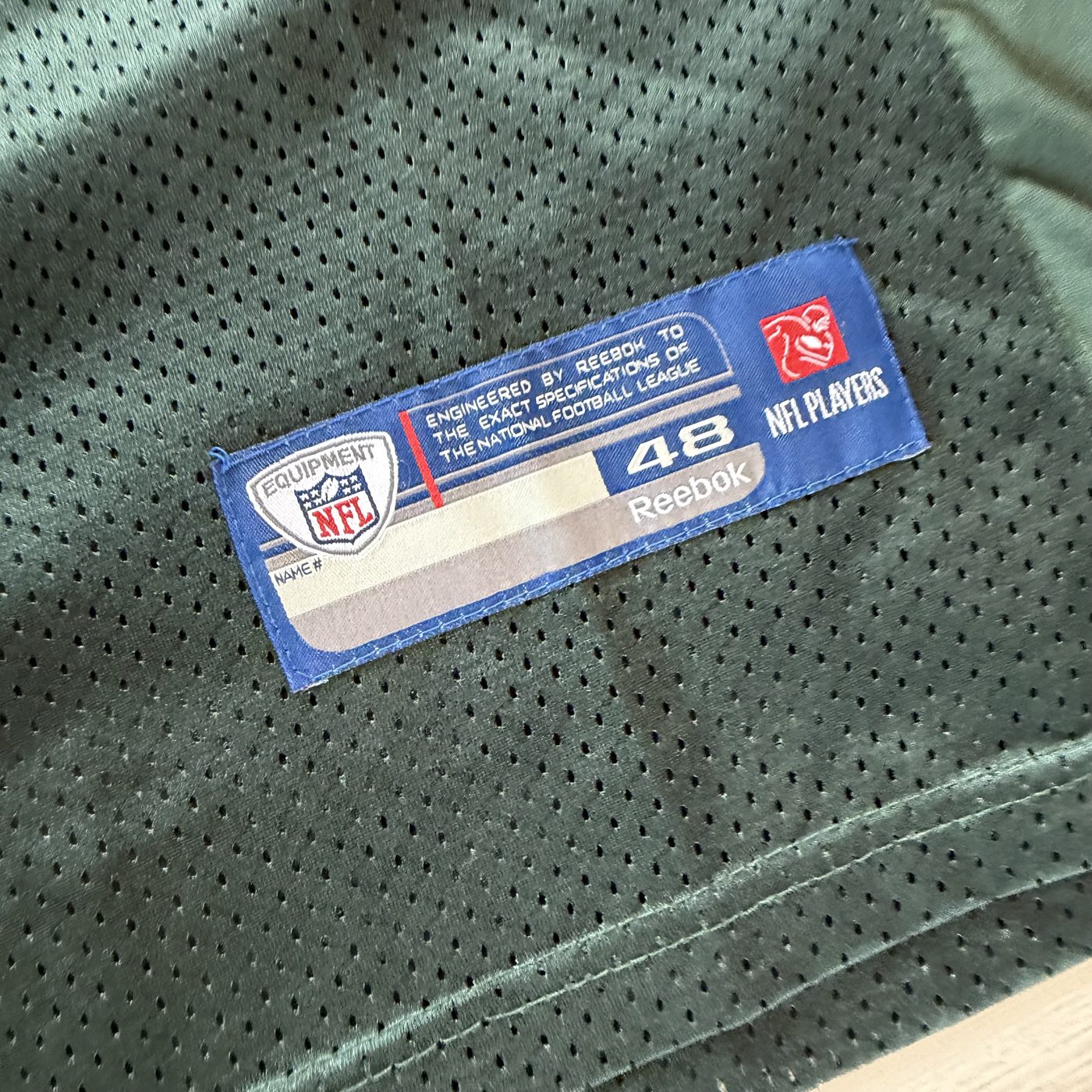
The brand label matters for the same reason. This is a Reebok NFL Equipment On Field piece, from the stretch when Reebok held the league uniform license before Nike took it over in 2012. Nobody is making new ones. Every listing in that search is a used listing, which quietly removes the retail price ceiling that caps so much team apparel.
So the title carried all of it: brand, player, team, number, event, size. Six attributes, each one a thing a real person types.
Three sold comps is not a market, and it was still enough
The pricing research on this came back thin, and it is worth showing exactly as it landed rather than cleaning it up.
| Comp figure, 90 days | Amount |
|---|---|
| Sold listings found | 3 |
| Average all-in sale, item plus shipping | $54.61 |
| Median | $60.98 |
| Lowest sale | $36.87 |
| Highest sale | $65.98 |
| Listed at average plus 10 percent | $59.99 |
Three sales in ninety days is a trickle. It also spreads from $36.87 to $65.98, which is a twenty nine dollar spread on an item whose average is fifty four. That is not a tight market with a known price. That is a handful of data points and a lot of room to be wrong.
What makes thin data usable is treating the average as the anchor and the ask as a question. The listing went up at $59.99, about ten percent over the average, with free shipping and Best Offer turned on. Best Offer is the safety valve on a sparse comp set. If the ask is high, a buyer tells you so with a number instead of walking away silently, and you still get to decide.
It closed forty two days later at $53.99, six dollars under the ask and sixty two cents under the ninety day average. The thin comp set turned out to be right. It just took six weeks to find out.
The numbers
| Line | Amount |
|---|---|
| Bought | $5.00 |
| Listed at | $59.99 |
| Sold on eBay | $53.99 |
| eBay fee, estimated at 13.5 percent | $7.29 |
| Profit | $41.70 |
eBay had not reported a final value fee against this order, so the fee line is the standard 13.5 percent estimate rather than a confirmed charge, and the profit is what is left after it. No postage figure came back on the order either, so there is no shipping row here.
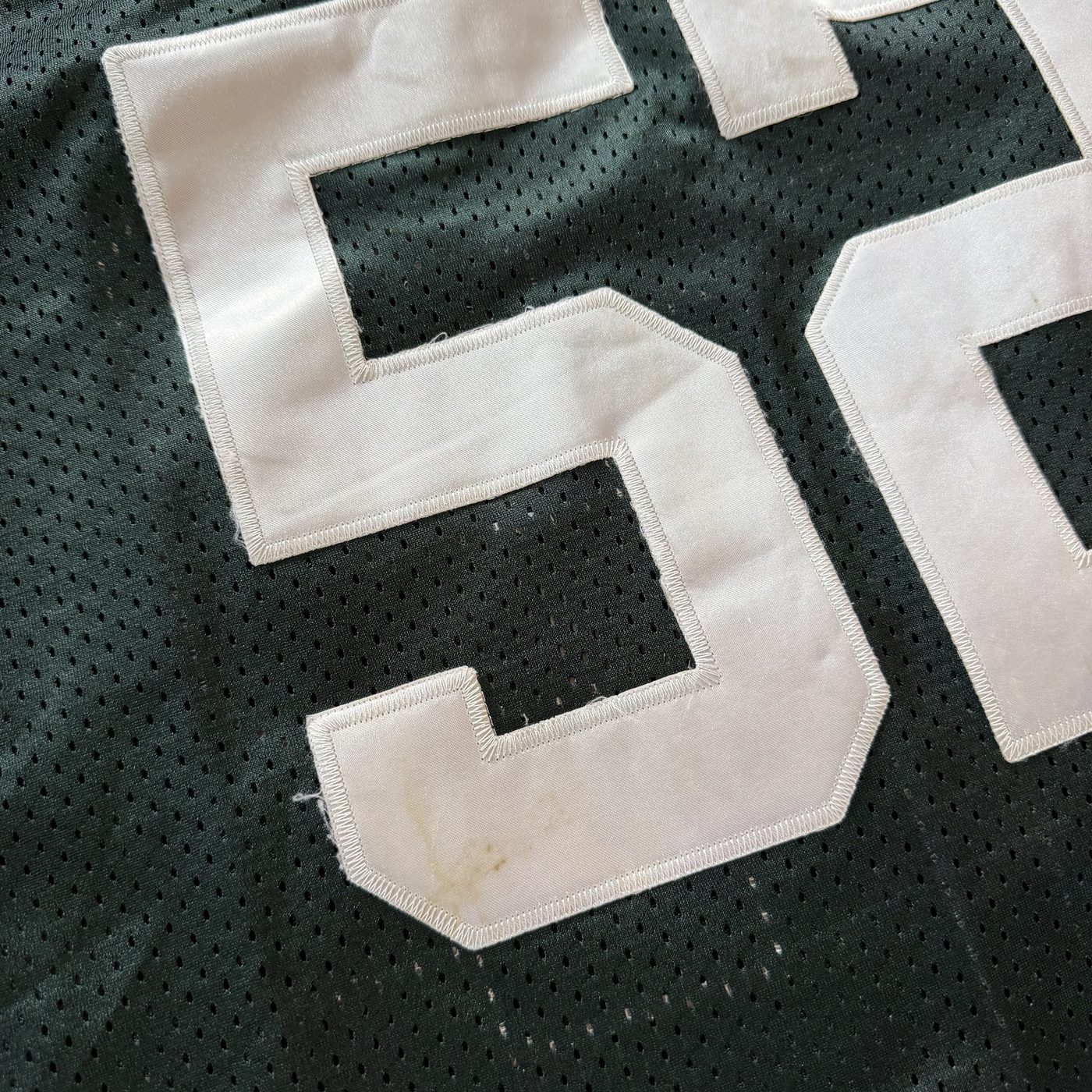
The condition was honest and the listing said so in plain language. White twill yellows with age, and the 52 on this one has light yellowing and a few small tan spots photographed up close. Writing that down is not a discount you volunteer. It is the reason a forty two day listing closes instead of coming back as a not-as-described return.
What to do on your next run
Flip the jersey inside out before you look at the price tag. Stitched twill is the whole decision, and it takes one motion.
Then read the chest for a patch and the collar for a brand era. A dated event patch and a retired-license maker both shrink the search a buyer has to do, and a smaller search is where a one-off item gets found.
Price off the average when the sold data is thin, not off the high sale, and leave Best Offer on so a sparse market can talk back to you. Five dollars became $41.70 because a stitched number held its value and the ask was close enough to the truth to get answered.