Reselling News
Reselling News: eBay's Promoted Listings Minimum Jumps to 5 Percent for Some Sellers and EU Orders Need New Product Codes November 1
Some eBay sellers now hit a 5 percent minimum Promoted Listings ad rate with no announcement, and EU orders need new product codes from November 1.
Two eBay changes landed in the last few days without the usual fanfare, and both of them are the kind you find out about by walking into them. One decides what your advertising costs through the busiest quarter of the year. The other decides whether a parcel to a European buyer clears customs or sits at the border.
Some sellers cannot set a General ad rate below 5 percent any more
Value Added Resource reported on October 2 that sellers editing a Promoted Listings General campaign are running into a hard floor of 5 percent, with eBay returning the message "Set an ad rate between 5% and 100%." The old floor was 2 percent, and according to that reporting eBay's own help page still listed 2 percent as the minimum on the day sellers were being blocked from using it.
The scale so far says test, not switch. Data from Flipwise put it at roughly 280 listings across 30 sellers hitting the error, with about 12,000 promotions under 5 percent still going through in the same window. That is a rejection rate near 2 percent. There has been no announcement from eBay, so nobody outside the building knows whether this is a bug, a limited experiment, or the shape of the next policy.
Treat the money as real anyway, because the gap is not small. Promoted Listings General only bills you when the ad gets credit for the sale, so the difference between 2 and 5 percent on a forty dollar item is eighty cents versus two dollars every time one sells. Run two hundred of those between now and Christmas and you are looking at a couple hundred dollars that used to be margin.
The five minute version: open your Advertising tab and try to set one General campaign back to the rate you normally run. If it saves, nothing has changed for your account yet. If you get the 5 percent error, make a decision instead of accepting the floor across the whole store. Five percent stacked on the final value fee is a serious bite on thin-margin inventory, and plenty of items in a typical closet sell perfectly well with no ad spend at all. Either price the ad into the listing or pull that SKU out of the campaign.
EU-bound orders need product identifiers from November 1
eBay has posted an EU customs update on new Product Identifier requirements. Starting November 1, 2026, anything shipped from outside the EU to a buyer inside the EU has to carry product identifier data, and the value of the item does not get you out of it.
There are three pieces. The Merchant Product Identifier is your eBay listing ID, and eBay supplies that one for you. The other two are yours. The non-standardized identifier is the manufacturer part number or product code for the item. The standardized identifier is a GTIN, EAN, UPC, ISBN, or similar. In eBay's own wording, missing identifier information passed to your carrier may cause delivery disruption, longer processing, or customs clearance delays.
So this is a listing data chore, not a shipping chore, and it is easier to do in October than in a December backlog. If you sell branded goods with a barcode, fill in the MPN and the UPC or EAN fields in your item specifics now. If you sell genuine one-off secondhand with nothing scannable on it, put in the real manufacturer part number wherever you can find one and keep the description specific. And if EU sales are a once-a-quarter accident for you, this is a fair moment to decide whether you want those orders in November at all, rather than discovering the answer at the counter.
The takeaway
Neither of these showed up as a banner at the top of your seller hub. One costs money quietly, the other strands packages quietly, and both are fixable in about ten minutes if you go looking today. The habit worth building is the looking, not the fixing.
Working out what a platform change actually costs your specific inventory, and when the right answer is to opt out instead of pay it, is what we go through order by order inside The Income Lab.
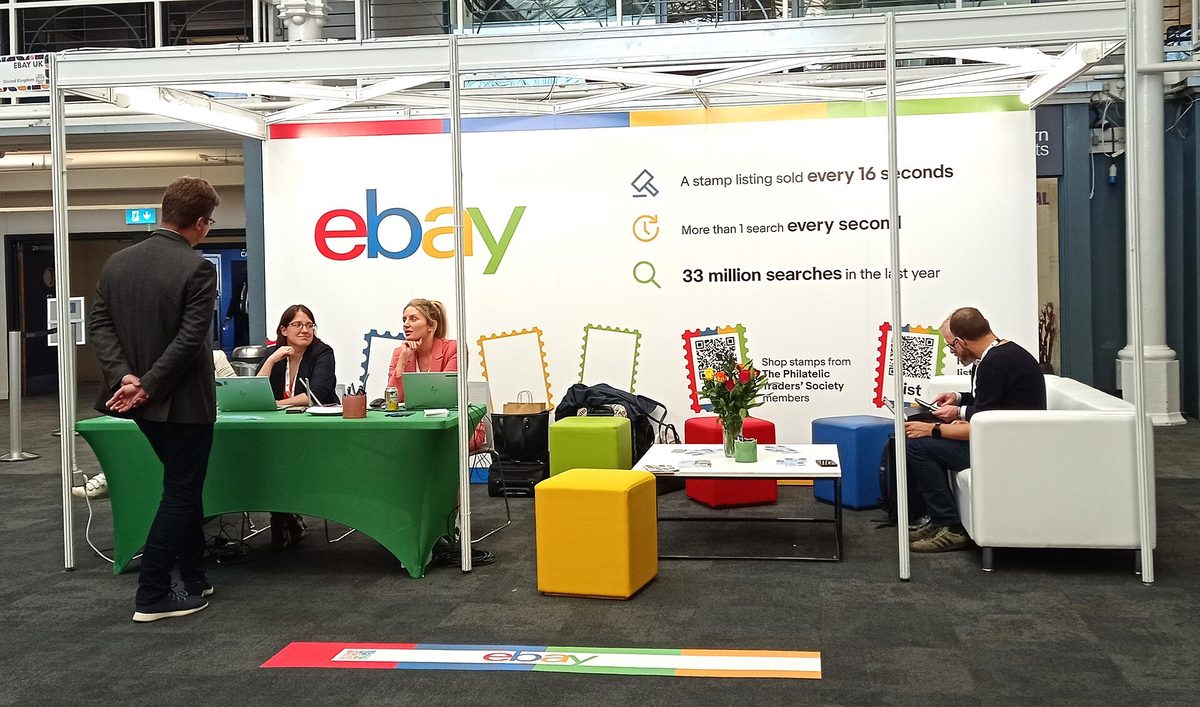
Hero photo by Philafrenzy, CC BY-SA 4.0, via Wikimedia Commons.