Flip Breakdowns
Nike Dri-FIT Long Sleeve Resale Value: A $5 Ohio State Tee That Sold for $28.99
Nike Dri-FIT long sleeve resale value from a real eBay flip: a $5 Ohio State tee priced off active comps, sold at full ask in seven days, $20.08 profit.
Fee estimated at 13.5 percent; eBay had not yet returned the exact figure.
Most people price a thrift find by pulling up eBay, filtering to Sold, and taking the middle of what comes back. That is the right method. The problem is the week it does not work, and you are standing there with a shirt in your hand and no sold data to look at.
That is what happened with this one. A black Nike long sleeve, five dollars, size large, and the sold-comp tool came back empty.
The shirt, and why a graphic tee cleared twenty dollars
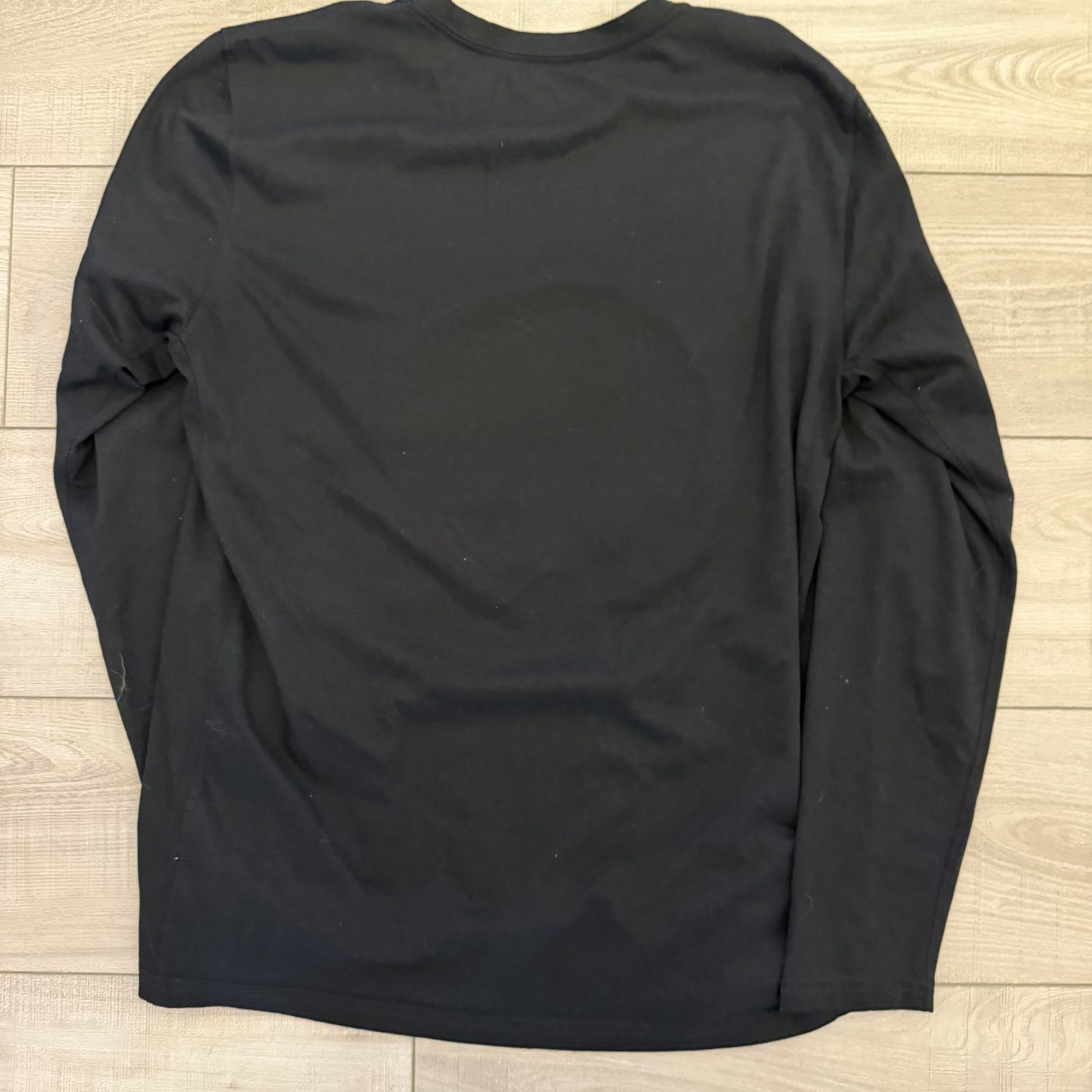
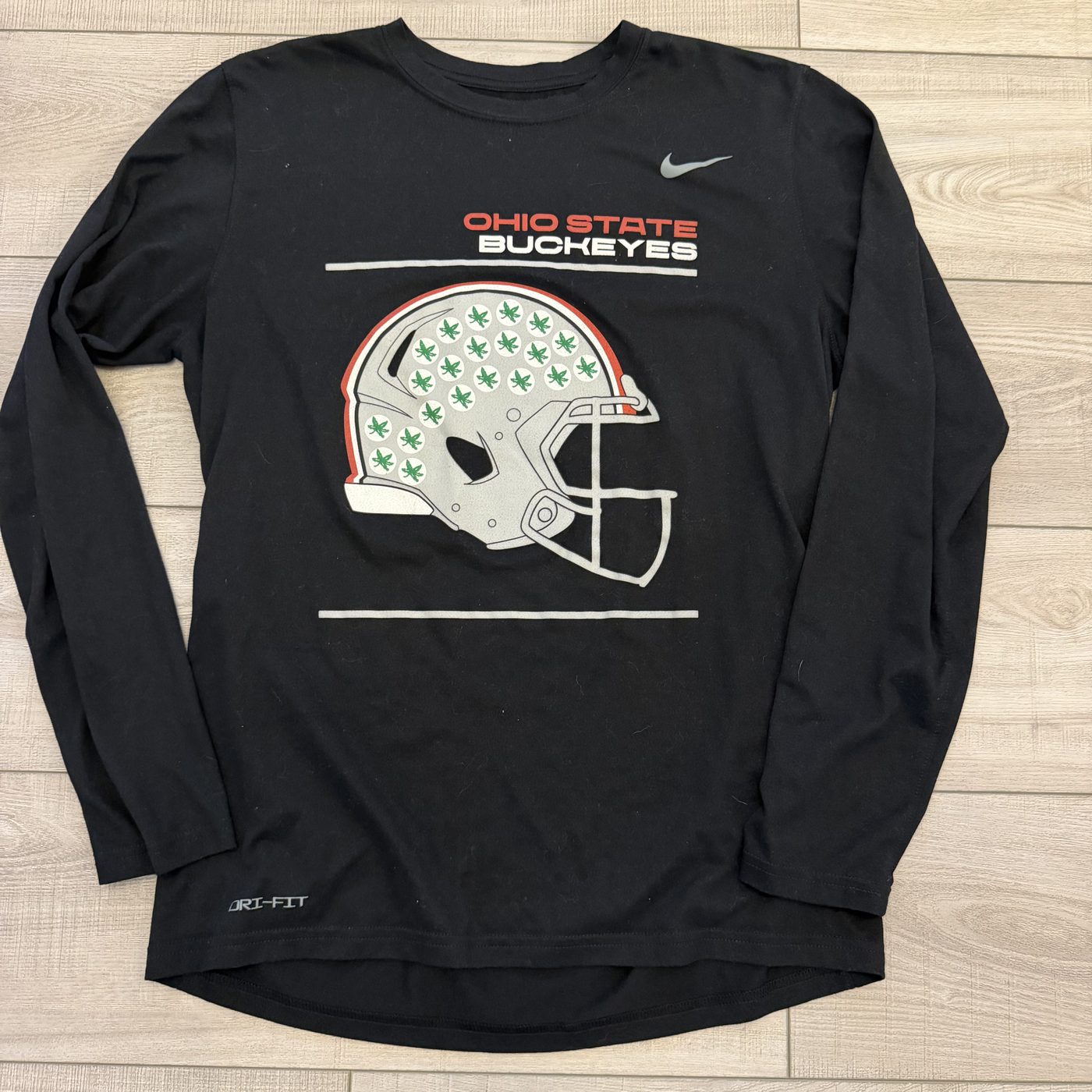
Look at the first photo. It is a plain black crew neck with a screen print on the chest: OHIO STATE in scarlet, BUCKEYES in white underneath, and the silver football helmet between two thin rules. The helmet is covered in the little green buckeye leaf stickers.
Those stickers are the whole thing. Ohio State hands them out for plays made on the field, and they are the single most recognizable detail in college football merchandising. A buyer scrolling a search page does not read your title first, they see the thumbnail, and that helmet reads as Ohio State from across the room.
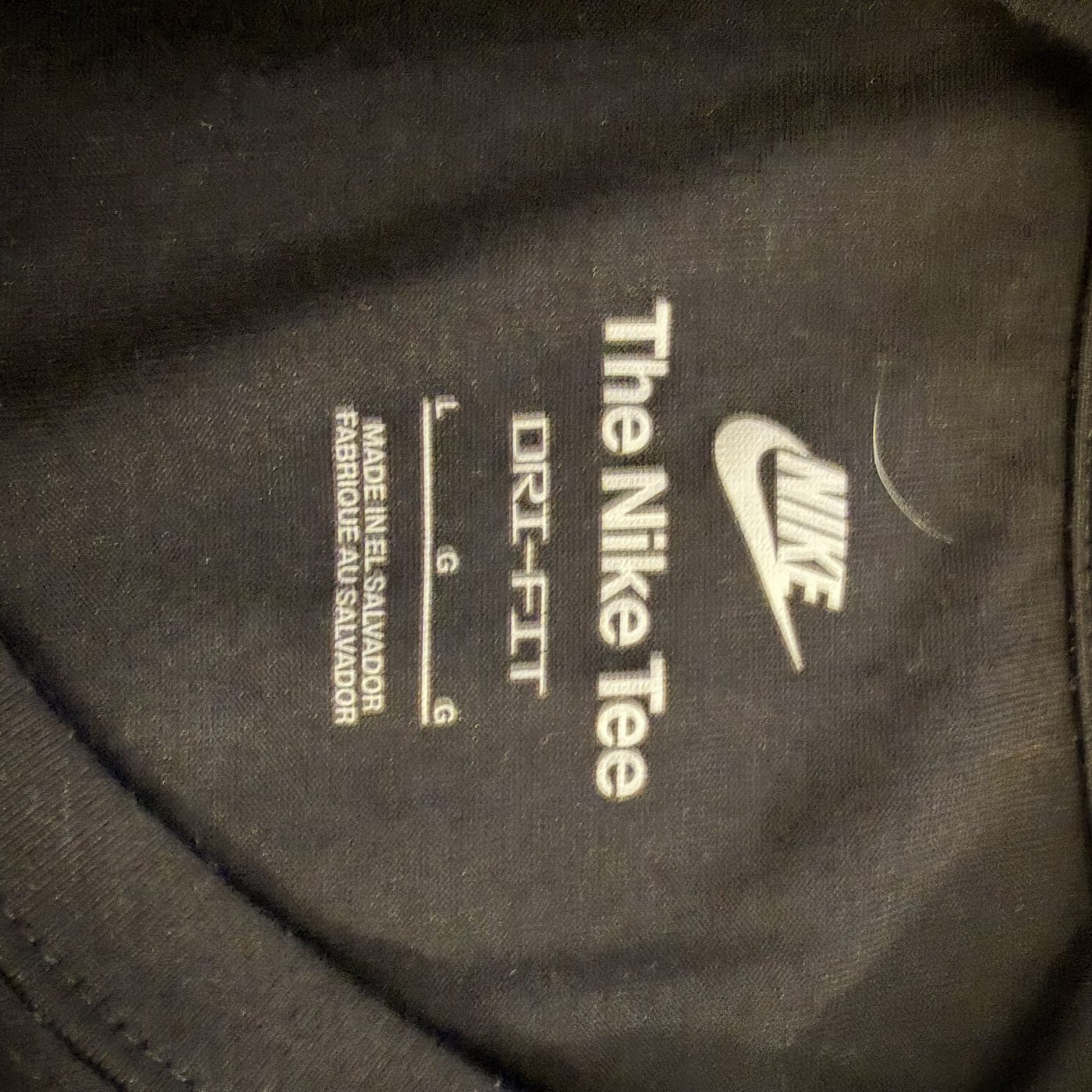
Two more details push it above a five dollar tee. The swoosh at the upper right chest and the DRI-FIT mark at the lower left hem mean this is Nike team-issue performance fabric rather than a cotton souvenir shirt, and buyers search that way. It is also a long sleeve, which has a shorter selling season but a thinner supply than the short sleeve version of the same graphic.
The condition check was quick. Graphic intact with no cracking and no peeling, which is the first thing to fail on a screen print. No holes, no stains, no rips. Light pilling and lint, which is normal and brushes off.
The sold comps were not available, so the pricing came from active listings
Here is the part worth your attention. The usual sold-comp lookup failed on this item, so the price came from the eBay Browse API instead, which reads live listings that are currently for sale rather than completed sales.
| Active comp figure | Amount |
|---|---|
| Query | Nike Dri-Fit Ohio State Buckeyes long sleeve shirt |
| Listings in the pool | 294 |
| Listings sampled | 50 |
| Lowest ask | $12.00 |
| Median ask | $29.99 |
| Mean ask | $29.12 |
| Highest ask | $46.87 |
Read that table for what it is. Those are asking prices, and asking prices are what sellers hope for, not what buyers paid. Plenty of those 294 listings have been sitting for months. Nobody validated a single one of them with a sale.
So the rule is to discount an active median before you use it, usually to somewhere around 70 to 80 percent, and to treat the whole number as a ceiling rather than a target. The listing went up at $28.99, a dollar under the active median, with free shipping and Best Offer left on.
That was arguably still aggressive. The safer play on active-only data would have been low twenties.
Seven days, full ask, no offer
It listed on September 8 and sold on September 15 for $28.99. Seven days, nobody sent an offer, and the buyer paid the number on the page.
That outcome says something specific: for this shirt, the active median and the real sold price were close to the same. The 294-listing pool was deep enough and the item common enough that the market had already settled on what it was worth. A thin pool of eight listings would not have told the truth the same way.
The honest read is that this was a reasonable estimate that landed, not a trick. Price off active comps on a deep pool of an ordinary licensed item and you will usually be in range. Do it on a rare piece with twelve listings and you will be guessing.
The numbers
| Line | Amount |
|---|---|
| Bought | $5.00 |
| Listed at | $28.99 |
| Sold on eBay | $28.99 |
| eBay fee, estimated at 13.5 percent | $3.91 |
| Profit | $20.08 |
eBay had not reported a final value fee against this order, so the fee line is the standard 13.5 percent estimate, and the profit is what is left after it. No postage figure came back on the order, so there is no shipping row. It went out in a poly mailer, which is the cheapest way to ship a shirt.
Five dollars in, $20.08 out, seven days on the shelf. That is a four times return on a shirt a lot of sourcers walk past because the word tee makes them think two dollars.
What to do when the sold data is missing
Do not skip the item and do not guess from feel. Work the active listings deliberately instead.
Count the pool before you trust the median, because a pool in the hundreds is a market and a pool under about twenty is an opinion. Then sort the active results by price plus shipping, lowest first, and read what the cheap end looks like, since the bottom of the active range is closer to reality than the middle is. Discount the median, leave Best Offer on so the market can correct you, and give it two weeks before you reprice.
The sourcing lesson is separate and simpler. On licensed college gear, the brand mark and the fabric decide the price more than the team does. A Dri-FIT or performance tag under a team logo is a twenty-five dollar shirt. The same graphic on a blank-label cotton blank is a four dollar shirt, and they hang on the same rack for the same five dollars.