Flip Breakdowns
NHL Jersey Resale Value: A $5 Authentic Reebok Edge That Sold for $64.99
NHL jersey resale value from a real eBay flip. A $5 authentic Reebok Edge Blues jersey sold for $64.99 and cleared $51.22 after fees.
Fee estimated at 13.5 percent; eBay had not yet returned the exact figure.
Two hockey jerseys can hang side by side on the same rack, priced the same, in the same colors, for the same team. One is worth about twelve dollars. The other is worth sixty-five. Nothing on the front of the jersey tells you which is which.
That gap is the whole reason the jersey rack is still worth working. Most shoppers see team colors and a number, decide it is a jersey, and move on. The difference between the cheap one and the good one lives in four details, and every one of them takes about five seconds to check.
Authentic and replica are two different garments
The NHL has always sold its jerseys in tiers. The cheap tier goes by names like replica, premier, or fan version. The expensive tier is the on-ice cut, the same construction the players wear. Both carry the same crest and the same team colors, so on a rack they read identically.
Here is what separates them in your hands.
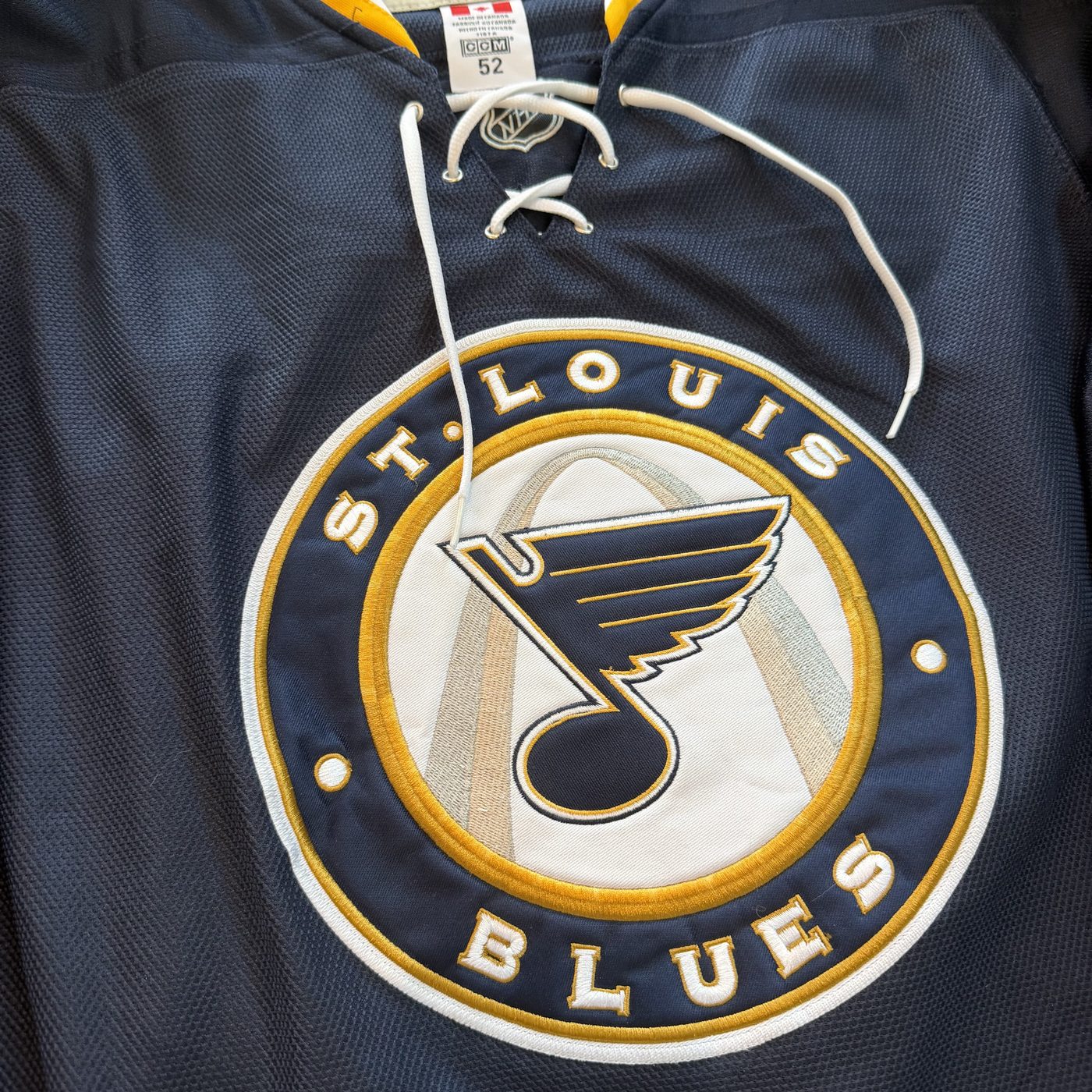
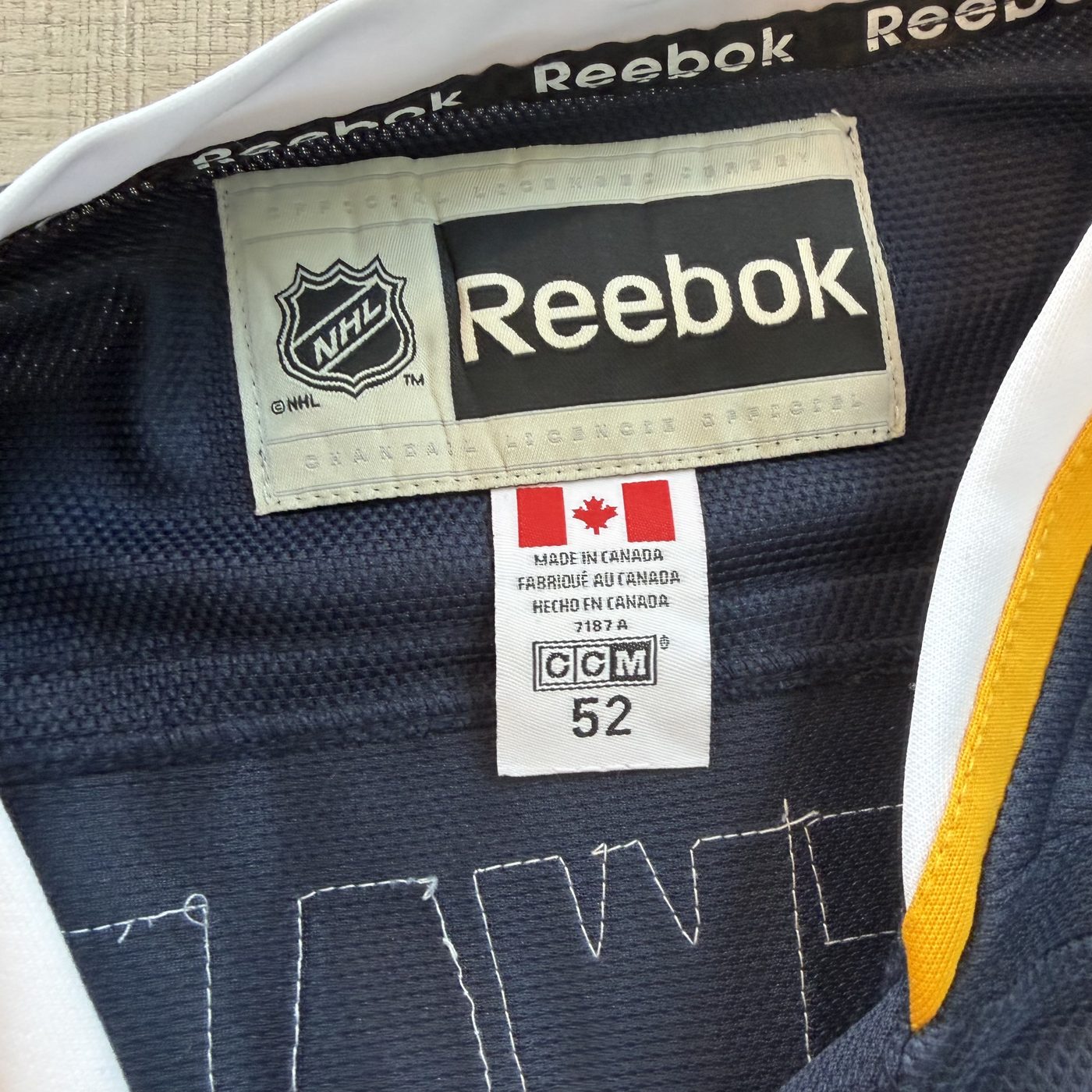
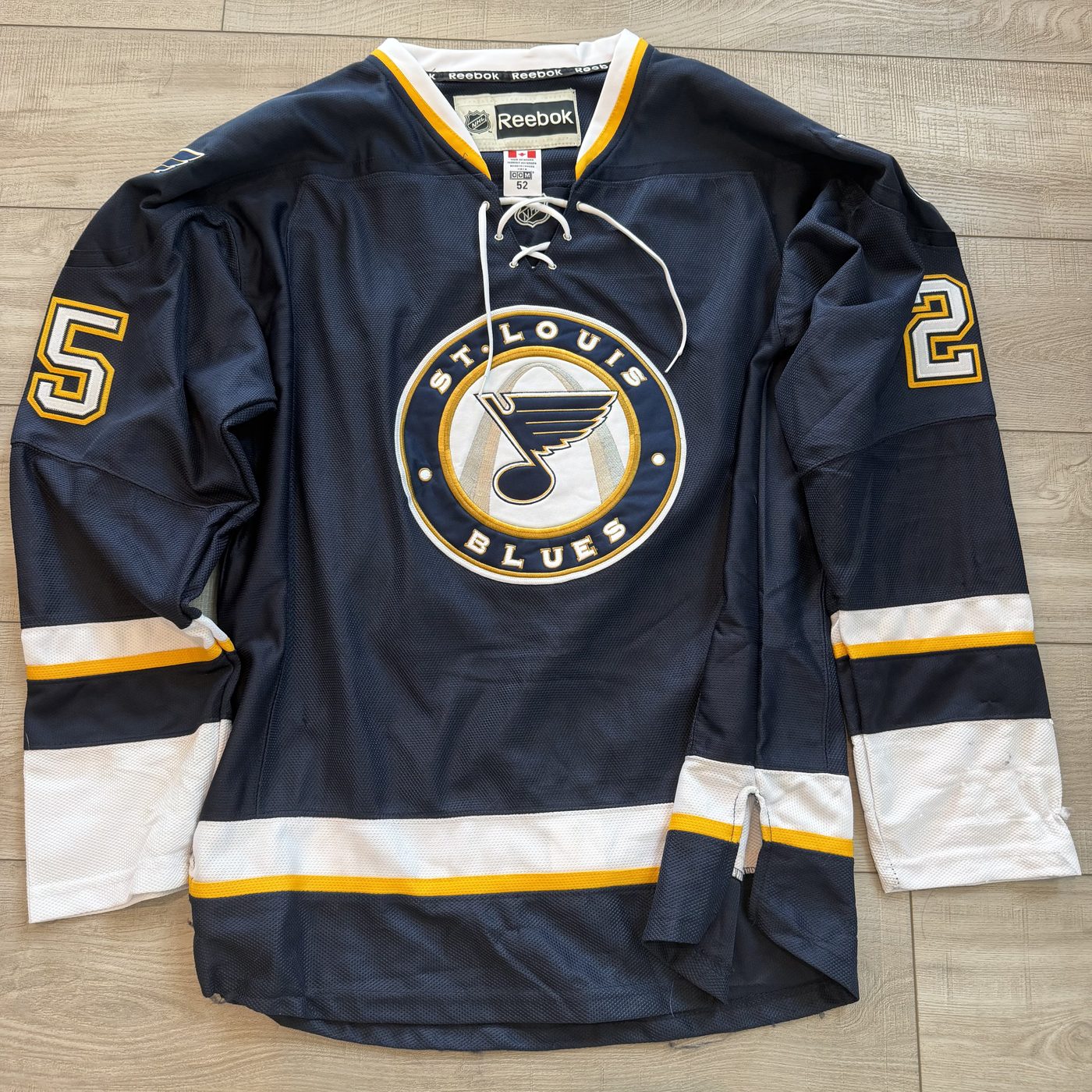
The size is a number, not a letter. On-ice jerseys are sized 46, 50, 52, 54, 56, 60. If the tag says L or XL, it is a replica. This one was a 52.
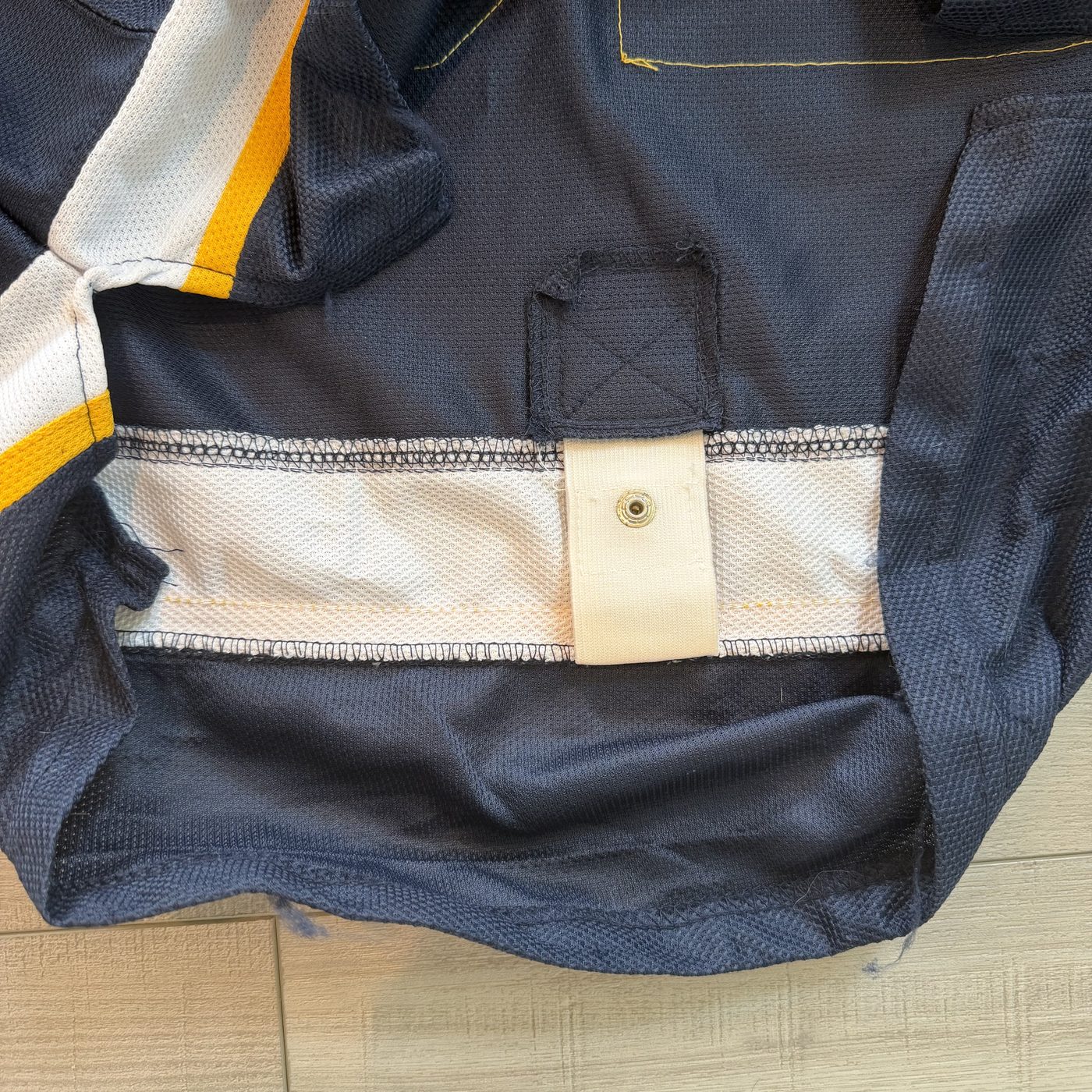
There is a fight strap at the back hem. A short fabric strap sewn inside the bottom back, meant to anchor the jersey to the player's pants. Replicas do not have one. It is the single fastest tell, and it is hidden, which is why most people never look.
The collar and the stitching are heavier. Authentic cuts use a lace-up or reinforced collar and thicker twill on the crest. Replica crests are often screened or lightly stitched onto thinner mesh.
Check where it was made. The Reebok Edge authentics were made in Canada, and the tag says so. Replicas were made overseas.
What this one turned out to be
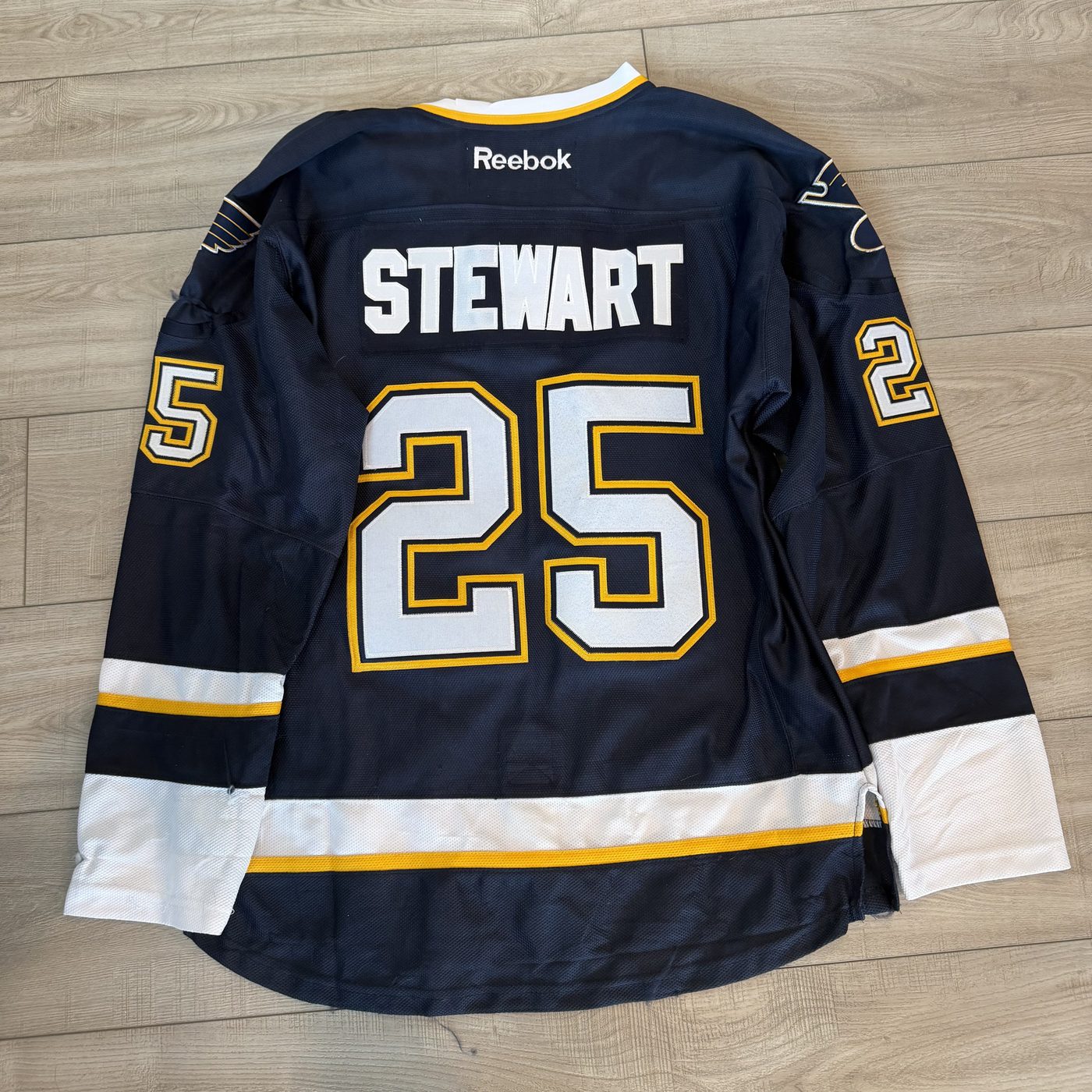
Navy home colorway, St. Louis Blues, Chris Stewart number 25 on the back. Embroidered Blue Note crest, lace-up collar, fight strap at the hem, Made in Canada tag, size 52. Every box checked. Five dollars.
The brand also dates it for you. Reebok made the NHL on-ice jersey through the 2016-17 season before Adidas took over the contract, so anything with a Reebok Edge tag is at minimum a decade old now. Buyers who want that specific era, that specific player, or that specific numbering set are not going to find it at a retail store. They find it on eBay.
The numbers
| Line | Amount |
|---|---|
| Bought | $5.00 |
| Sold | $64.99 |
| eBay fee, estimated at 13.5 percent | $8.77 |
| Profit | $51.22 |
The fee is the estimate, not a reported figure. eBay had not returned the exact number on this order, so it is calculated at 13.5 percent rather than printed as if it were confirmed. Shipping was covered by the buyer. Everything else on that table is the real transaction.
It had a hole in it and still sold for full ask
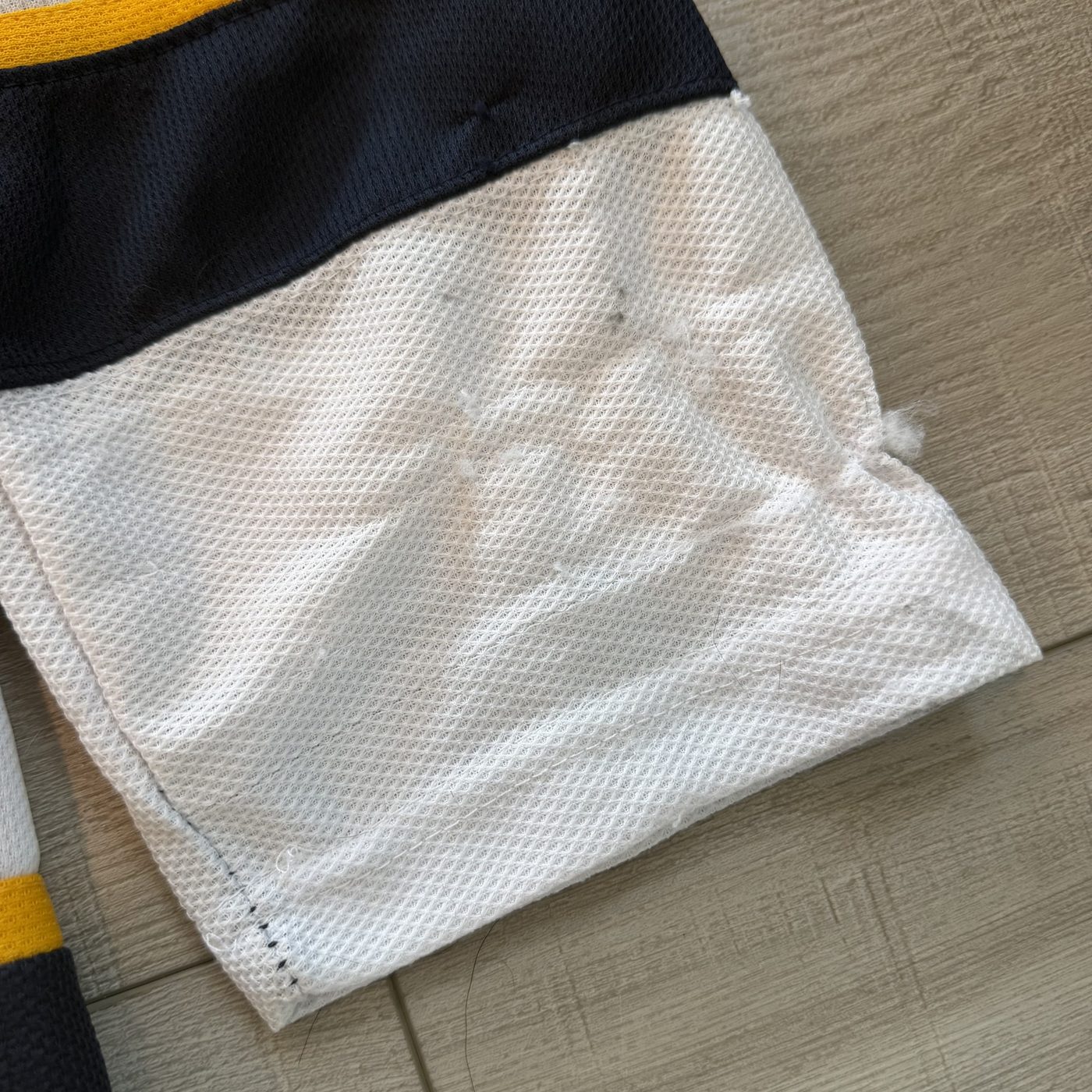
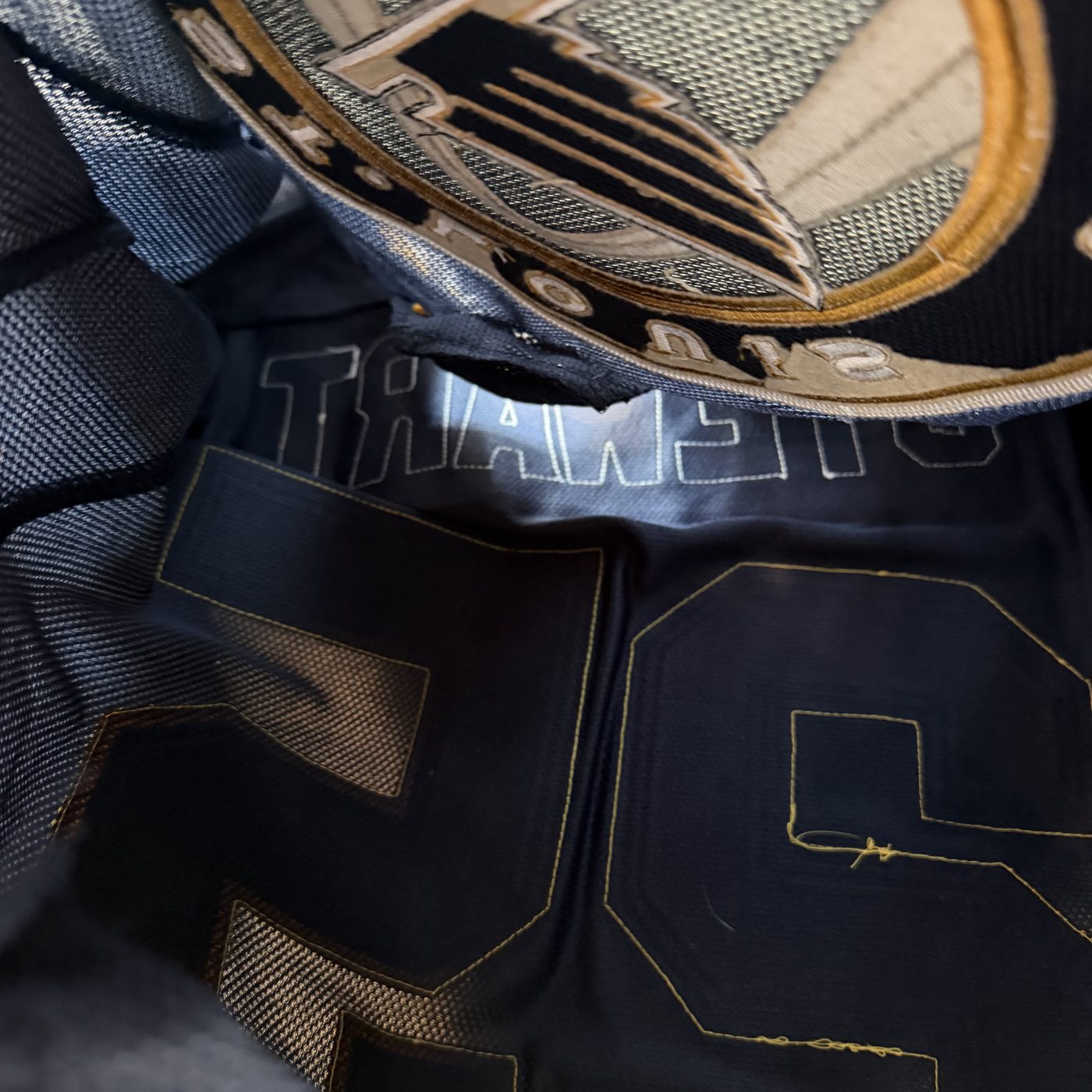
This jersey was not clean. There was a small hole in the mesh underlayer near the bottom of the front crest, plus light pilling on the cuffs and the hem. All of it went in the listing description and in the photos, called out directly.
It still sold at the asking price with no offer negotiated.
Flaws scare newer sellers off good inventory. What actually damages a sale is a flaw the buyer discovers after the box opens. A buyer who reads "small hole in the mesh under the crest" and buys anyway has already decided the hole is acceptable, and that buyer does not open a return case over the thing you told them about. Disclosure is not a discount. It is the reason you get to charge full price on an item that is not perfect.
Sixty-seven days on the shelf
It listed on July 3 and sold September 8. Just over two months.
That is normal for this category and it is worth saying plainly, because a lot of flip content implies everything moves in a week. Authentic jerseys are a narrow market. You are waiting for someone who wants that team, near that size, at that price. There are fewer of those people than there are buyers for a plain hoodie, and they pay several times more when they arrive.
Fifty-one dollars in profit for sixty-seven days of a jersey hanging on a rod in the corner is an easy trade. The mistake is pricing it to move in week one, because the buyer who was going to pay sixty-five dollars was always going to take a while to show up.
How to work a jersey rack
Go straight to the back hem and feel for the strap. That one motion sorts the whole rack faster than reading a single tag.
Read the size tag for a number. Letters mean replica, and replicas are usually not worth the listing time unless the player or the era is genuinely collectible.
Turn the crest over. Embroidered and stitched through the fabric is the good version. Printed or glued on is not.
Do not put a flawed one back. Photograph the flaw, describe the flaw, and price it slightly under a clean comp. That is the item other resellers left for you.
Full sourcing runs and the jerseys that did not pass the check are on the channel.