Flip Breakdowns
Fanatics Resale Value: A $5 Hoodie Listed at $50 That Sold for $35
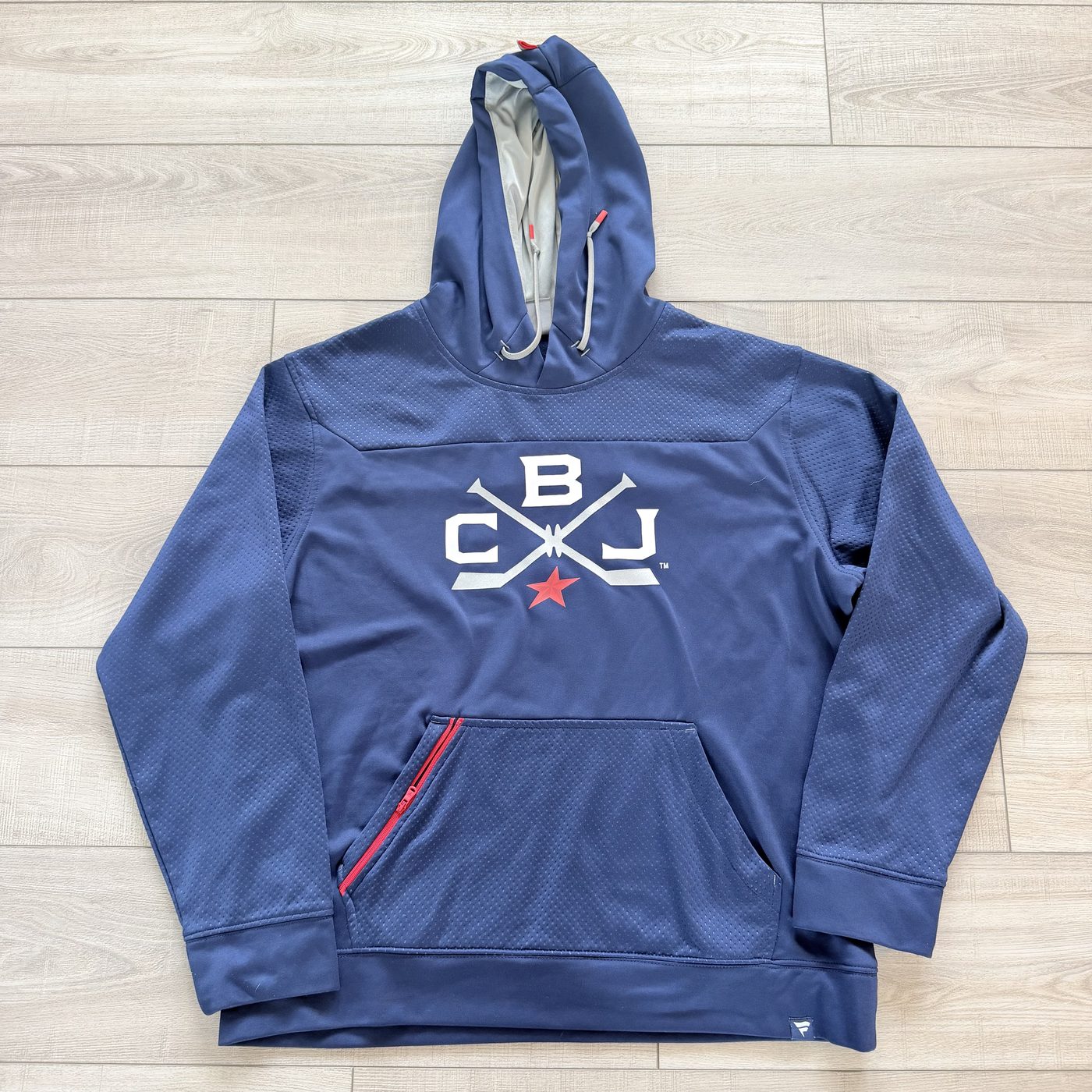
Fanatics resale value from a real eBay flip: a $5 Blue Jackets hoodie listed at $49.95 with Best Offer on, sold for $35 after 44 days.
Fee estimated at 13.5 percent; eBay had not yet returned the exact figure.
Fanatics is the brand most reselling advice tells you to put back on the rack. It is the stuff in the arena team shop and the mall kiosk, it is printed rather than stitched, and there is a new version of it every season. By the usual rules it should be worth four dollars.
This navy Blue Jackets pullover came off the rack for the standard five, and it paid $25.27 after fees.
What Fanatics actually is
Fanatics holds the license for most of the fan apparel sold in NHL, NFL, and MLB team shops. That is the part people hold against it. The brand is everywhere, which means supply is high and nothing about the label itself makes a buyer pay more.
What the brand does give you is a license. A Fanatics hoodie carries a real team mark, in the team's real colors, and that is what somebody is actually shopping for. Search traffic for this item arrives on the team name. The word Fanatics is in the listing title for the people who filter by brand, and that is the whole job it does.
So the brand is not the value here. The team is, and the brand is only proof the logo is legitimate.
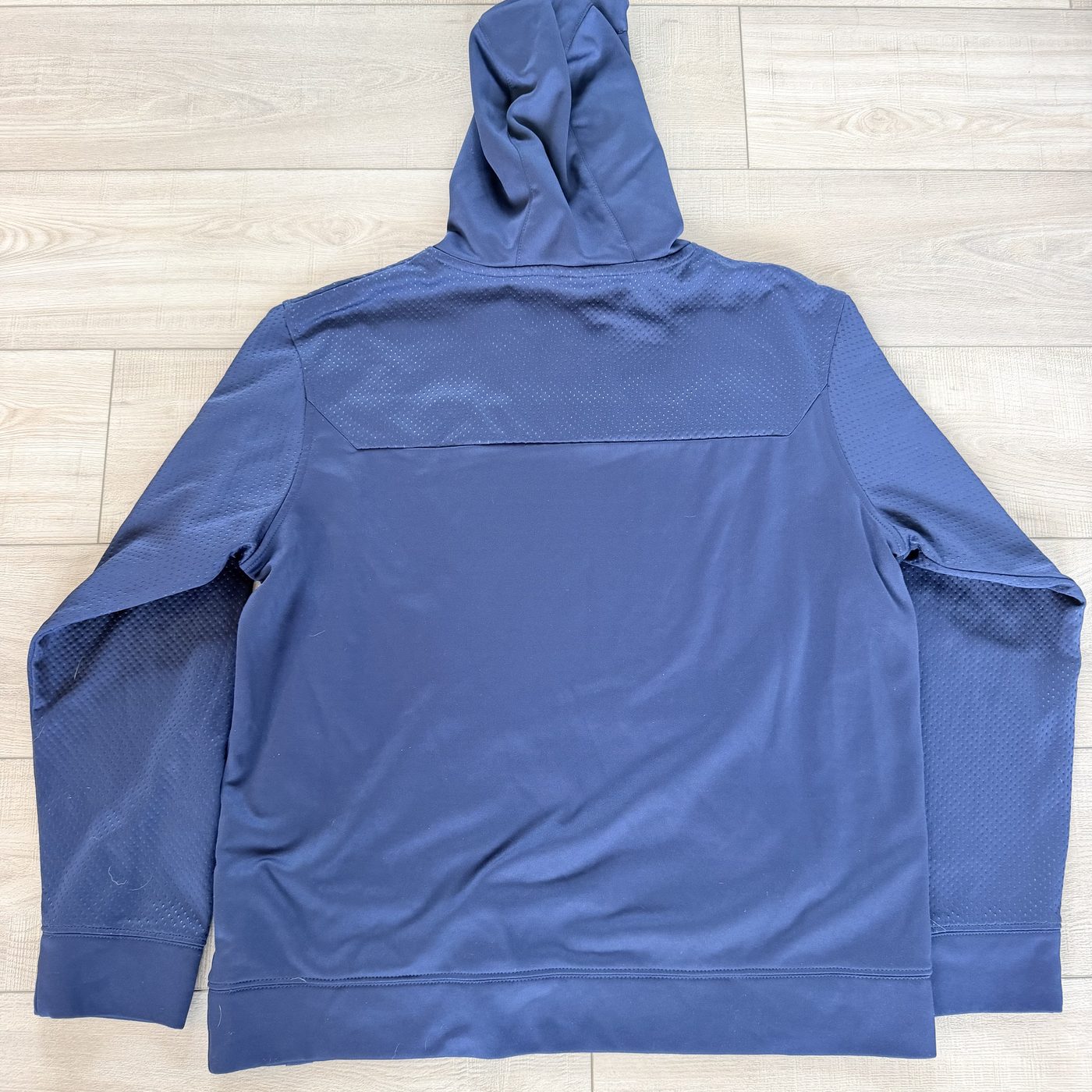
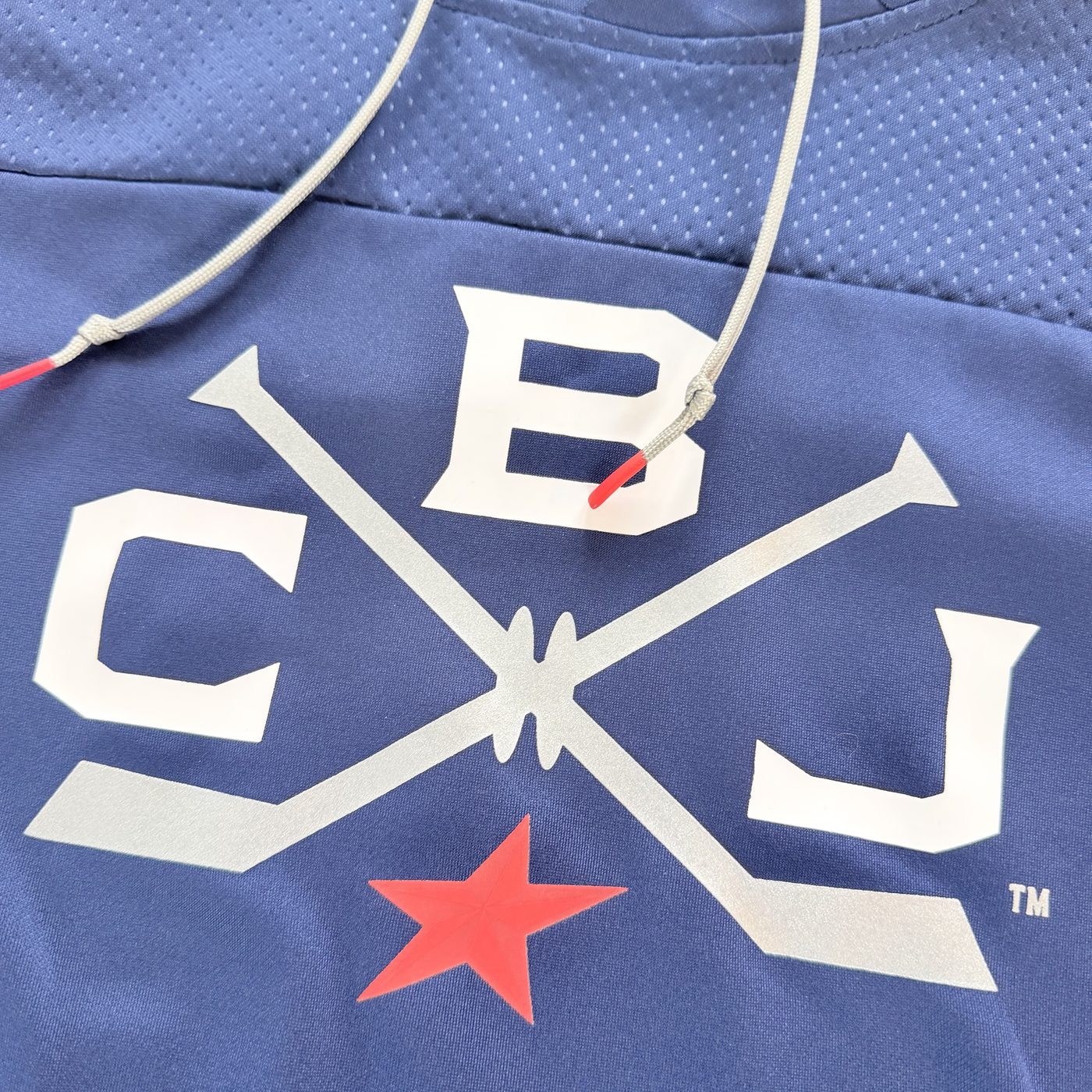
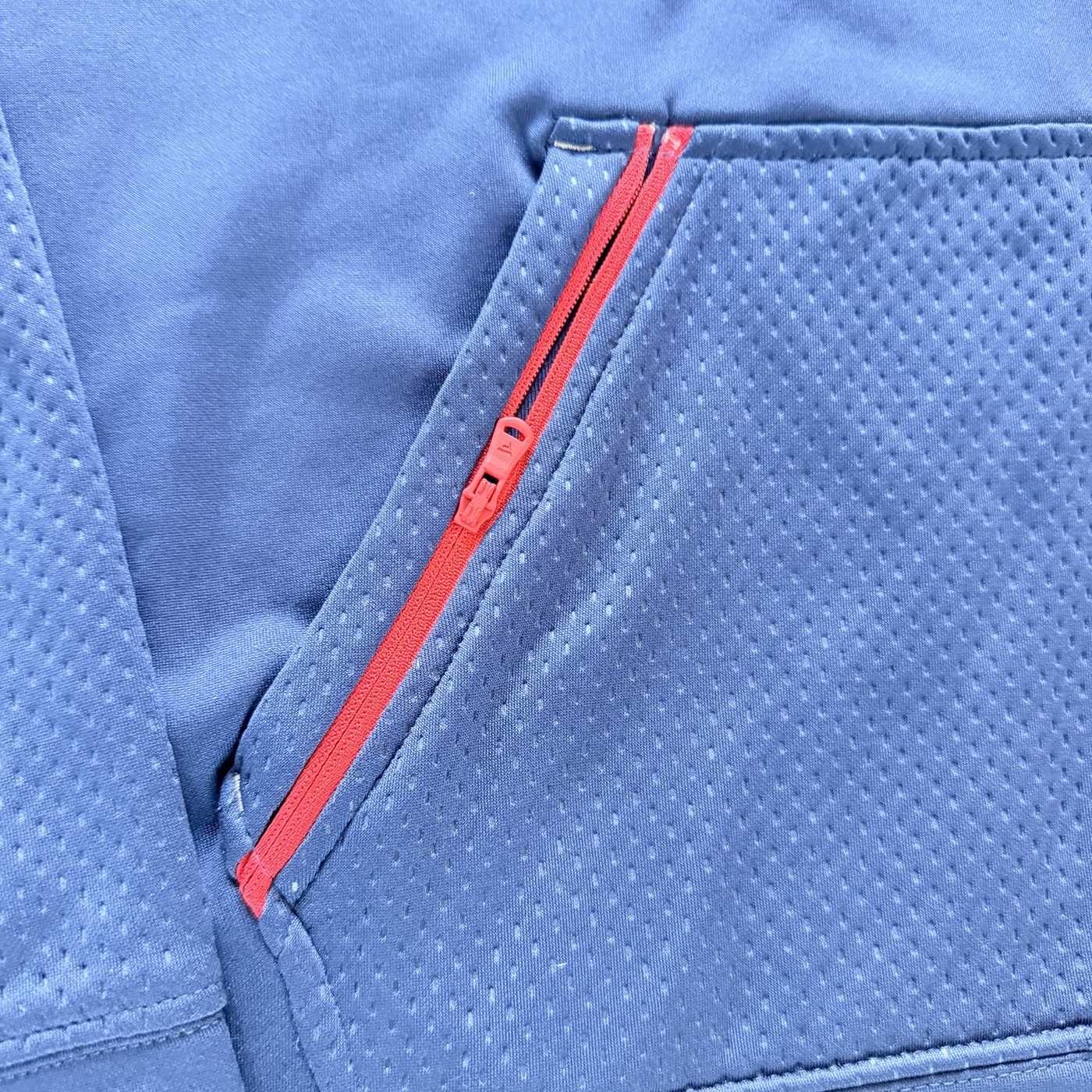
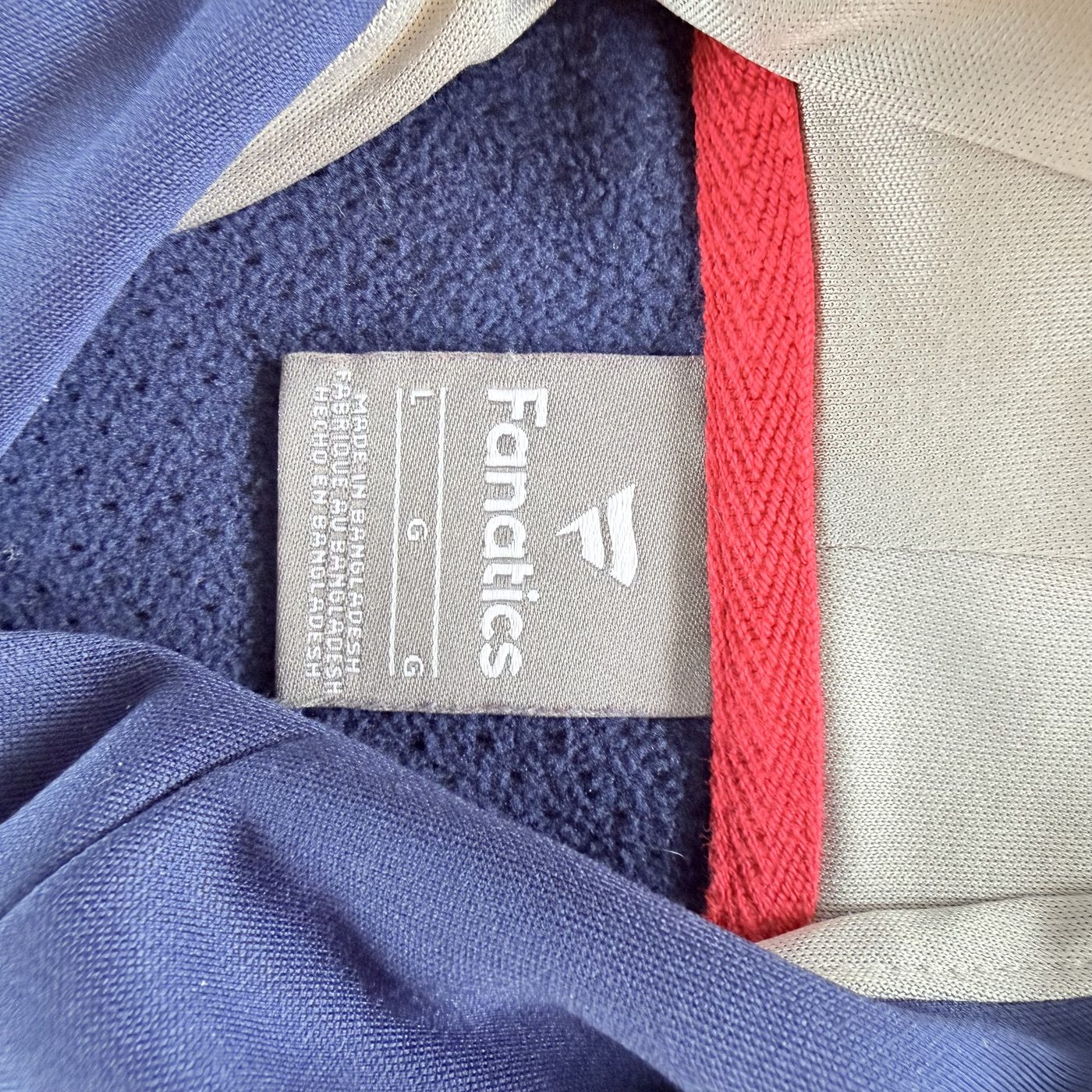
This one is the CBJ crossed sticks in white with a red star across the chest, size L on the interior tag, made in Bangladesh. Textured dot-knit panels across the shoulders and the kangaroo pocket, a red zipper on the pocket, gray hood drawstrings, brushed fleece inside. No rips, holes, or stains. Light everyday wear.
The ten second rack check
Licensed fan apparel moves or it sits based on three things, and all three are readable before you reach the register.
Check the team first and check it against where you are standing. A Columbus Blue Jackets hoodie in an Ohio thrift store is competing with every other local donation of the same thing. Regional supply is the reason so much local team gear is cheap, and it is also the reason you ship it out of the region to sell it.
Then check whether the piece has a detail. A plain team crewneck is the most common item in this category. This hoodie had textured knit panels and a zippered pocket, which puts it in the team shop's upper tier rather than the clearance table, and buyers who know the line recognize it in a photo.
Last, check the fleece interior and the cuffs. Brushed fleece pills, and the cuff hem goes before anything else on a pullover. Those are the two spots a buyer zooms in on, so they are the two spots that decide whether you are selling at the top or the bottom of the range.
The ask was 52 percent over the comps
Here is the research that came back before this went up, and it was a thin market.
| Comp figure, 90 days | Amount |
|---|---|
| Sold listings found | 5 |
| Average all-in sale, item plus shipping | $33.01 |
| Median | $32.79 |
| Lowest sale | $29.99 |
| Highest sale | $38.95 |
| Listed at | $49.95 |
Five sales in ninety days, bunched between $29.99 and $38.95. That is a tight range on a thin set, which is unusual. It says the market agrees on what this is worth and that not many people are selling one.
The listing still went up at $49.95, which is about 52 percent over the median, with free shipping and Best Offer turned on. It went live on August 1 and sold on September 14 for $35.00. Forty four days, two dollars and twenty one cents above the median comp, and fifteen dollars under the ask.
Why the high ask still worked
The ask did not get paid and it was never going to. Setting it there did two things anyway.
It set the top of the negotiation. Best Offer only moves one direction, so your list price is the ceiling of every offer you receive. Price at the median and your realistic outcome is under the median, because the offers arrive below the ask and not above it. Price above the range and the conversation starts somewhere you can live with.
It also bought information without costing anything. The comp set was five sales. Five is enough to see a range and not enough to trust a price. Forty four days at $49.95 with offers coming in tells you more about the real demand than another hour of comp research would have, and the item was not losing money while it sat.
The honest cost of that choice is time. A list at $37.99 very likely sells in half the days. Forty four days is slow, and slow is a real expense when the goal is turning the same five dollars over and over.
The numbers
| Line | Amount |
|---|---|
| Bought | $5.00 |
| Listed at | $49.95 |
| Sold on eBay | $35.00 |
| eBay fee, estimated at 13.5 percent | $4.73 |
| Profit | $25.27 |
eBay had not reported a final value fee on this order, so the fee line is the standard 13.5 percent estimate and the profit is what is left after it. No postage figure came back either, so there is no shipping row and the label is not subtracted here.
What to take to your next run
Stop reading the brand on licensed apparel and start reading the license. Fanatics is not a premium label and it does not need to be. It is proof the team mark is real, and the team mark is the thing being searched.
Price a thin comp set from the top instead of the middle. Five sales give you a range, not a number. Your list price is the ceiling of every Best Offer you will ever receive, so put it above the range and let the offers find the floor.
Then count the days. This one paid five times the buy cost and took a month and a half to do it. The margin was good and the speed was not, and both of those are worth writing down next to the item.