Flip Breakdowns
Duluth Trading Resale Value: A $5 Novelty Print Shirt That Sold for $28
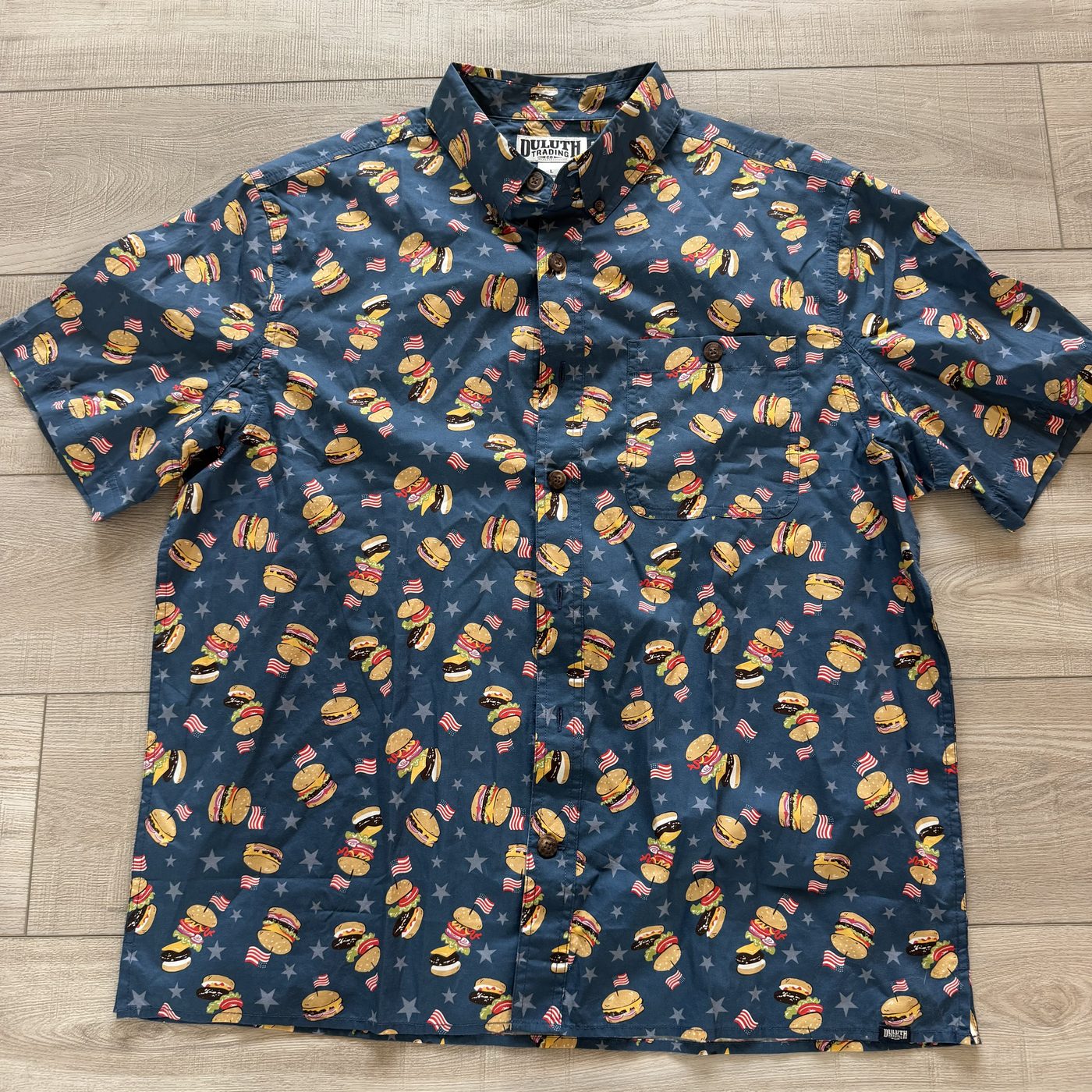
Duluth Trading resale value from a real eBay flip. A $5 thrifted novelty print camp shirt sold for $28.00 and cleared $19.22 after fees.
Fee estimated at 13.5 percent; eBay had not yet returned the exact figure.
The button-up rack is where most sourcing runs go to die. It is fifty feet of dress shirts nobody wants, and the handful of brands worth carrying to the register are buried in the middle of it.
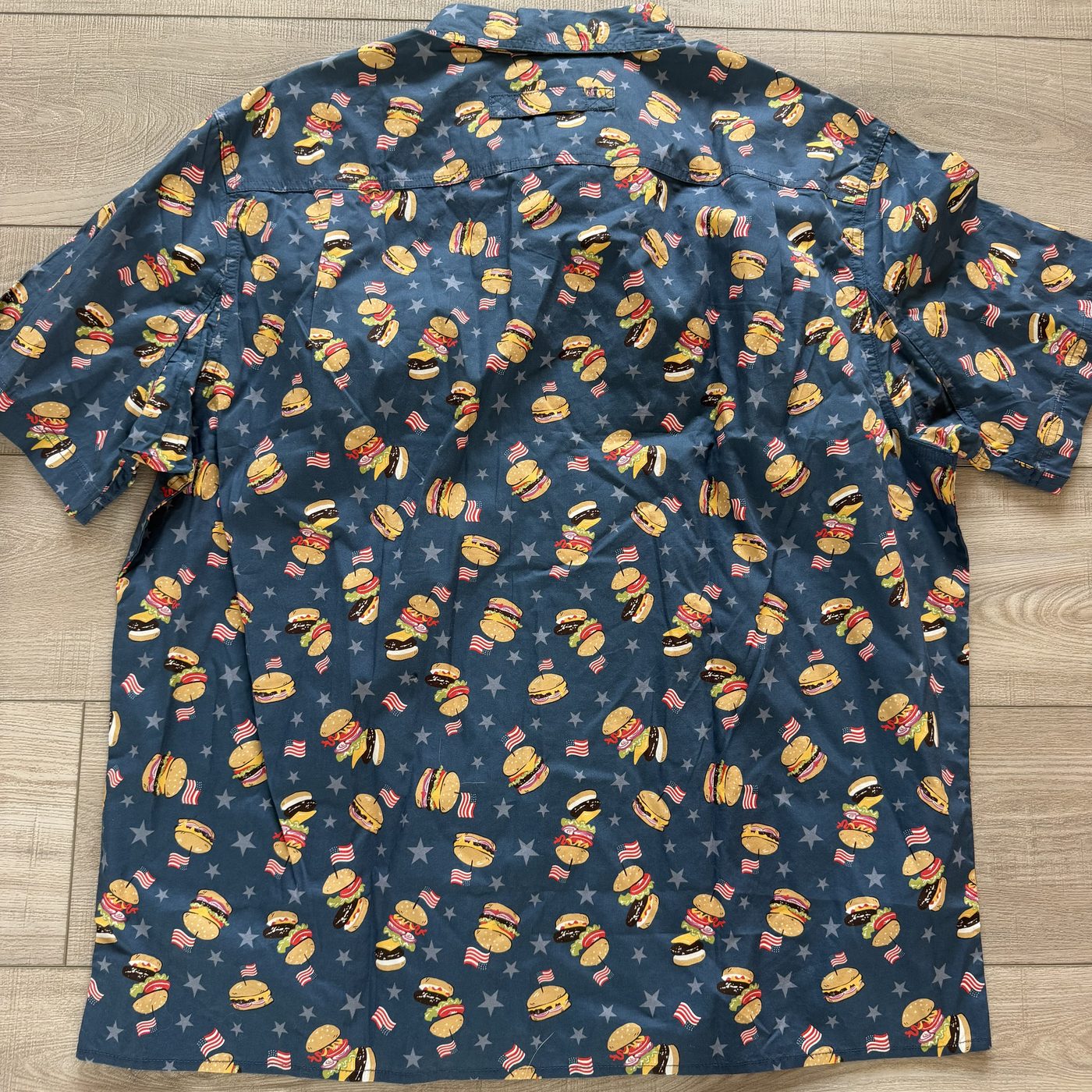
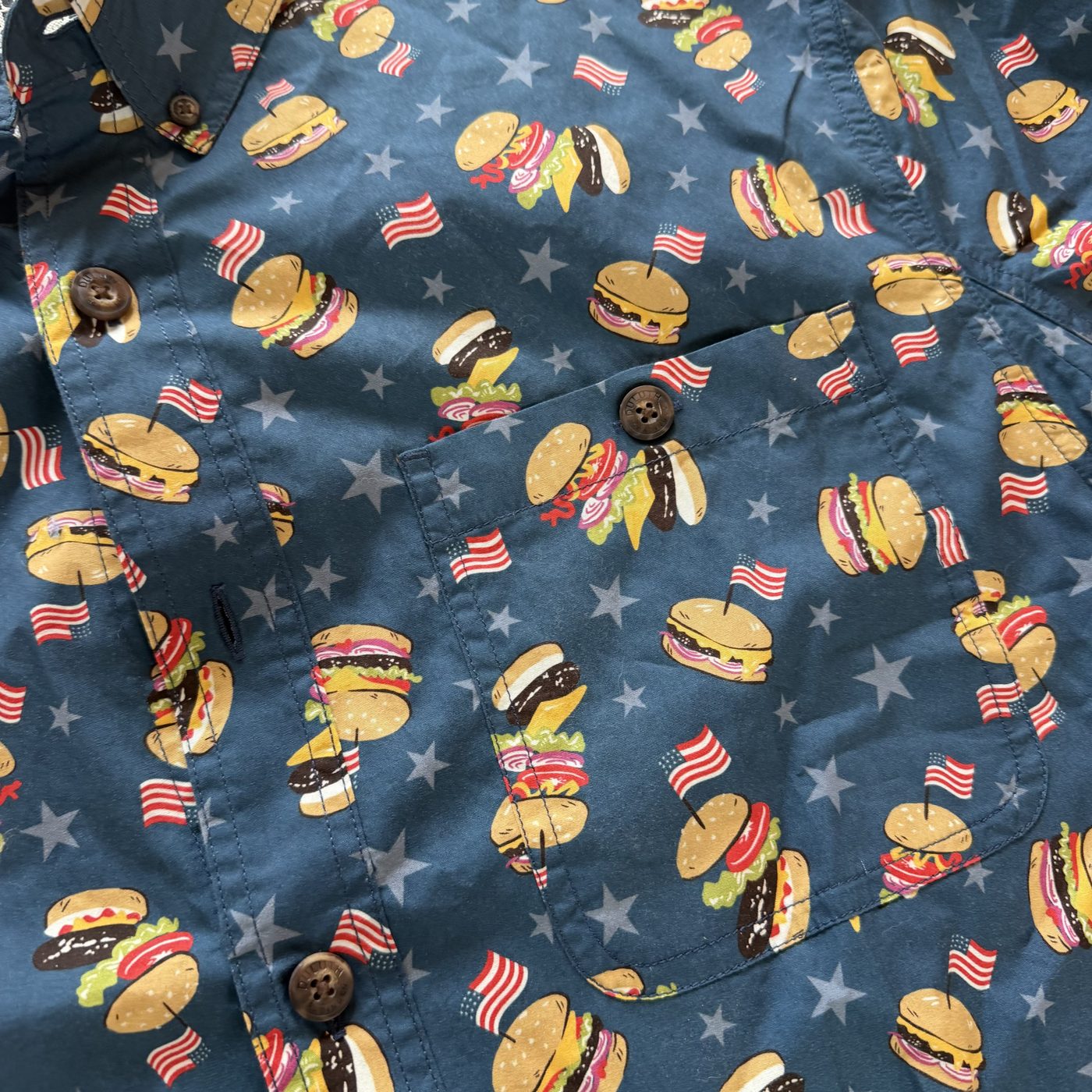
This one was a slate blue short sleeve camp shirt covered in cheeseburgers, hot dogs, flags, and gray stars. Five dollars. It sold on eBay for $28.00.
Two separate things made it worth pulling off the rack, and the tag was only one of them.
Duluth Trading has no discount rack anywhere else
Most workwear and outdoor brands end up somewhere cheap eventually. They land at an outlet mall, or a discount chain buys the overstock, or a department store runs them at forty percent off twice a year. That secondary channel caps what the used version can charge, because a patient buyer can just wait for the sale.
Duluth Trading does not have that channel. The company sells through its own website, its catalog, and its own retail stores, and that is the whole distribution map (Duluth Trading store locator, company background).
For a reseller that matters more than the fabric does. When a brand only sells itself, the secondhand market is the discount channel. There is nowhere else for a buyer to go looking for a deal, so the used listings absorb all of that demand instead of competing with a clearance shelf.
That is the test worth applying to any tag you do not recognize. Ask where else a buyer could get it cheaper. If the honest answer is nowhere, the used price holds up.
The print is what makes it findable
A plain blue Duluth button-up is a fine shirt and a mediocre listing. Nobody searches for a plain blue button-up, so it sits behind four hundred nearly identical ones and waits to get lucky.
A burger and hot dog print is a search string. It gives the listing title words that a buyer would actually type, and it narrows the competing pool from four hundred shirts down to a handful. Novelty camp shirts also carry their own demand curve that has nothing to do with workwear, which widens the buyer pool past the people who came looking for the brand.
So the brand explains why it holds a price. The print explains why anyone found it at all. You want both.
The comps said $28.50 to $33.00
The comp pull before listing found four sales in the prior ninety days.
| Comp figure | Amount |
|---|---|
| Sold in last 90 days | 4 |
| Average sold | $30.26 |
| Median sold | $29.76 |
| Lowest sold | $28.50 |
| Highest sold | $33.00 |
Four sales is thin data, and a $4.50 spread on a thirty dollar item is a loose band rather than a settled one. Loose bands mean condition, photos, and patience are doing more of the work than the market price is.
It went up at $32.99 with free shipping and Best Offer turned on, about ten percent over the average sold. That is the top of the observed range.
What the top of the band actually cost
The listing went live on August 11 and the shirt sold on September 23. Forty three days, and it closed at $28.00, five dollars under the asking price and a few cents under the lowest comp in the pull.
That is the honest shape of an aggressive list price with offers enabled. You are not really asking $32.99. You are opening at $32.99 and agreeing in advance to negotiate, and on a loose comp band the negotiation tends to end at the bottom of the range rather than the middle, because the buyer who makes an offer is the buyer who was already price shopping.
Listing nearer the $29.76 median would likely have moved it sooner. It would also have handed the same buyer a lower starting point to counter from. There is no free version of this trade, and anyone who tells you there is has not watched enough of their own listings sit.
What matters is knowing which one you picked. If the money is parked in a five dollar shirt, forty three days costs you almost nothing and the higher ask is a reasonable bet. If the money is parked in a two hundred dollar jacket, six weeks of nothing is a real problem and the median is the smarter opening.
The numbers
| Line | Amount |
|---|---|
| Bought | $5.00 |
| Listed at | $32.99 |
| Sold on eBay | $28.00 |
| eBay fee, estimated at 13.5 percent | $3.78 |
| Profit | $19.22 |
Only the buy cost and the sale price are hard figures here. eBay had not reported a final value fee against this order, so the fee line carries the standard 13.5 percent rather than a confirmed amount, and profit is what is left after it. No postage figure came back on this order either, so there is no shipping row to show.
A short sleeve shirt is near the bottom of the shipping-difficulty scale. It folds flat, it clears a poly mailer, and there is nothing on it that arrives cracked.
What to do with this on your next run
Work the button-up rack by tag, not by color. Duluth Trading Co, and the handful of other brands that only sell themselves, are the ones worth pulling.
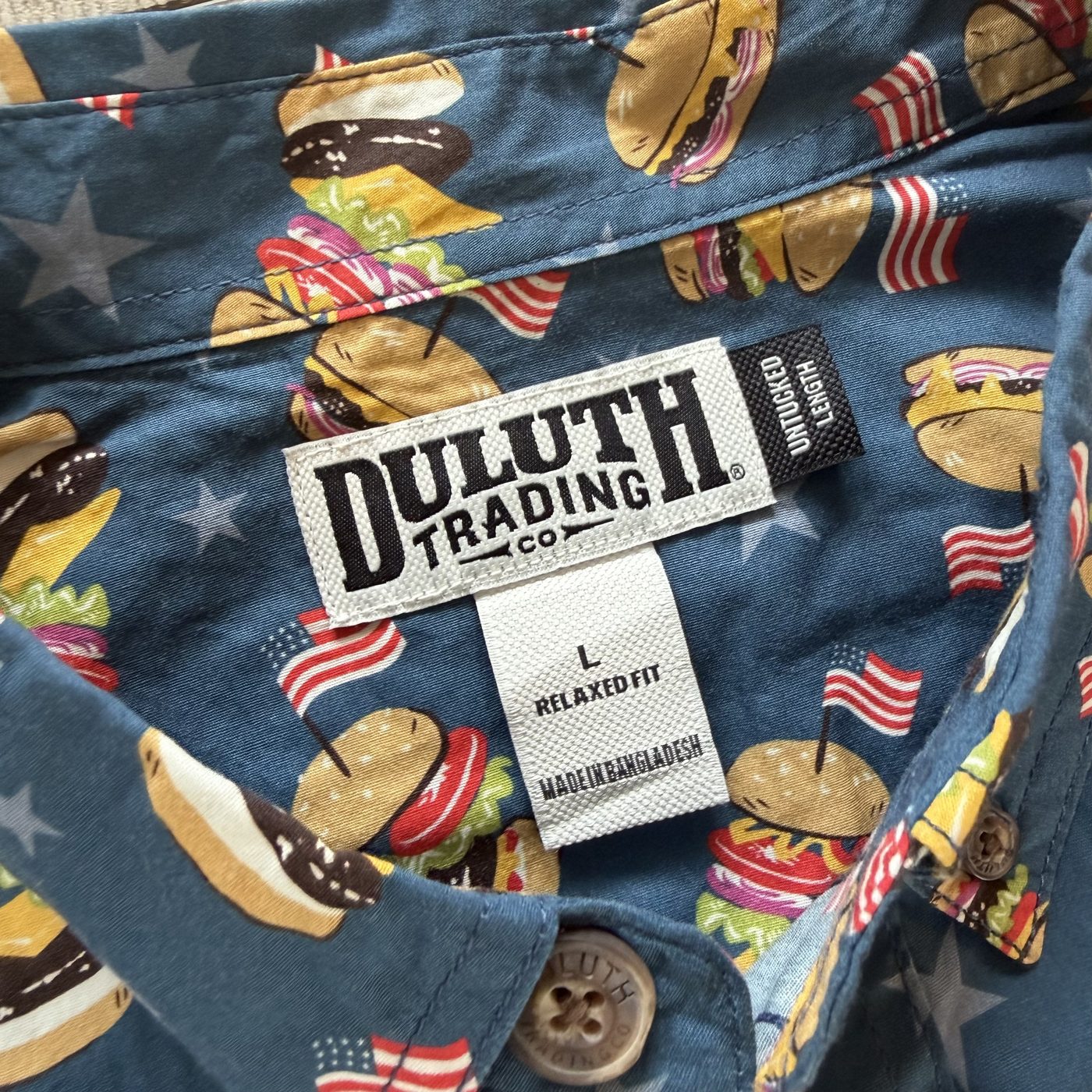
Then check three things before it goes in the cart. Look at the print for fading or cracking, since the graphic is half the value. Read the fit line on the tag, because Relaxed Fit and Untucked Length are the words the brand's own buyers use and they belong in your title. Confirm every button is there, since a missing one on a novelty print is not something you can quietly replace.
Title it with the brand, what the print actually shows, the style, and the size. Then decide your ask before you list, not after the first offer arrives.
Five dollars turned into $19.22 on a shirt about hot dogs. The tag is why it had a price. The print is why somebody found it.