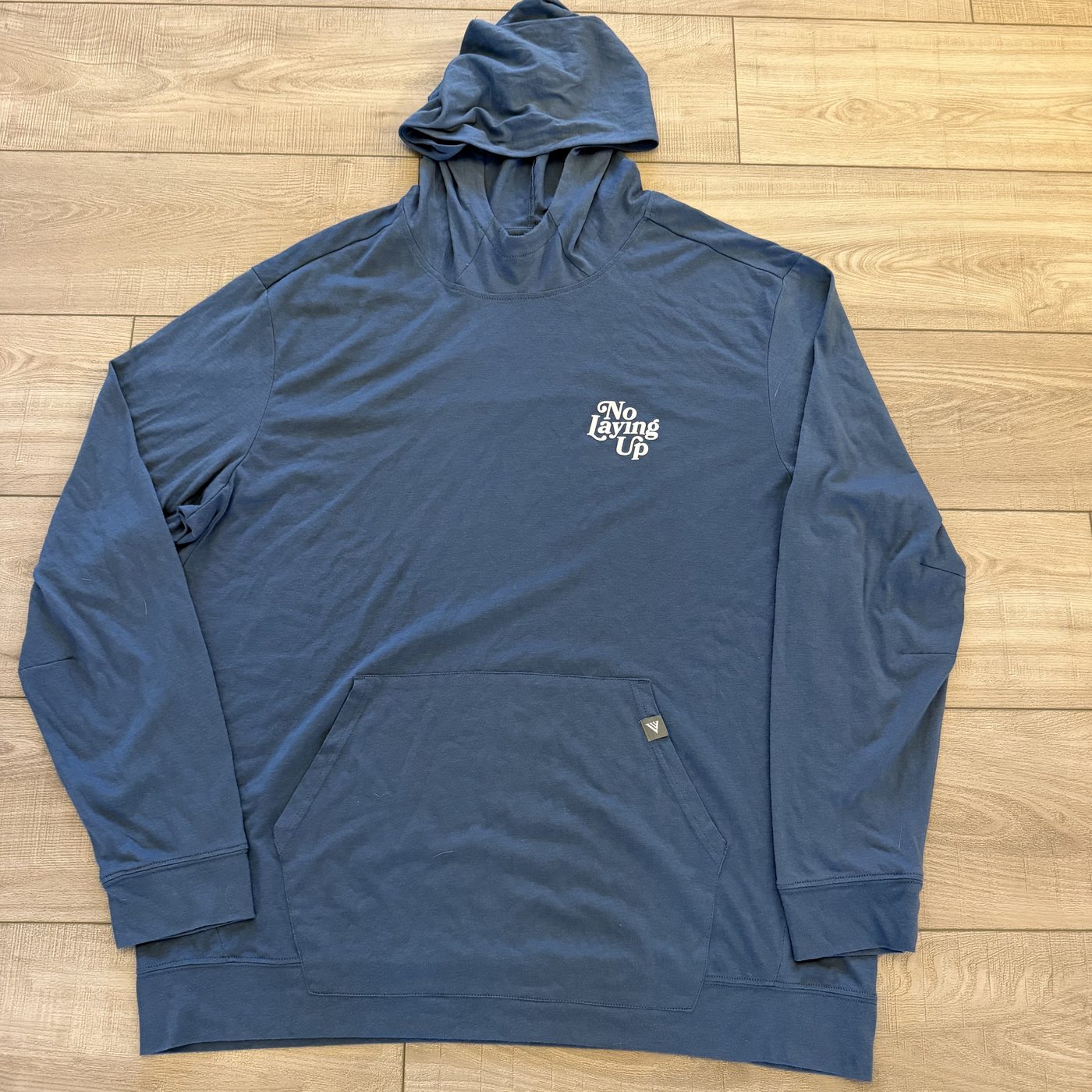
Flip Breakdowns
College Logo Golf Polo Resale Value: A $5 Polo That Sold for $40
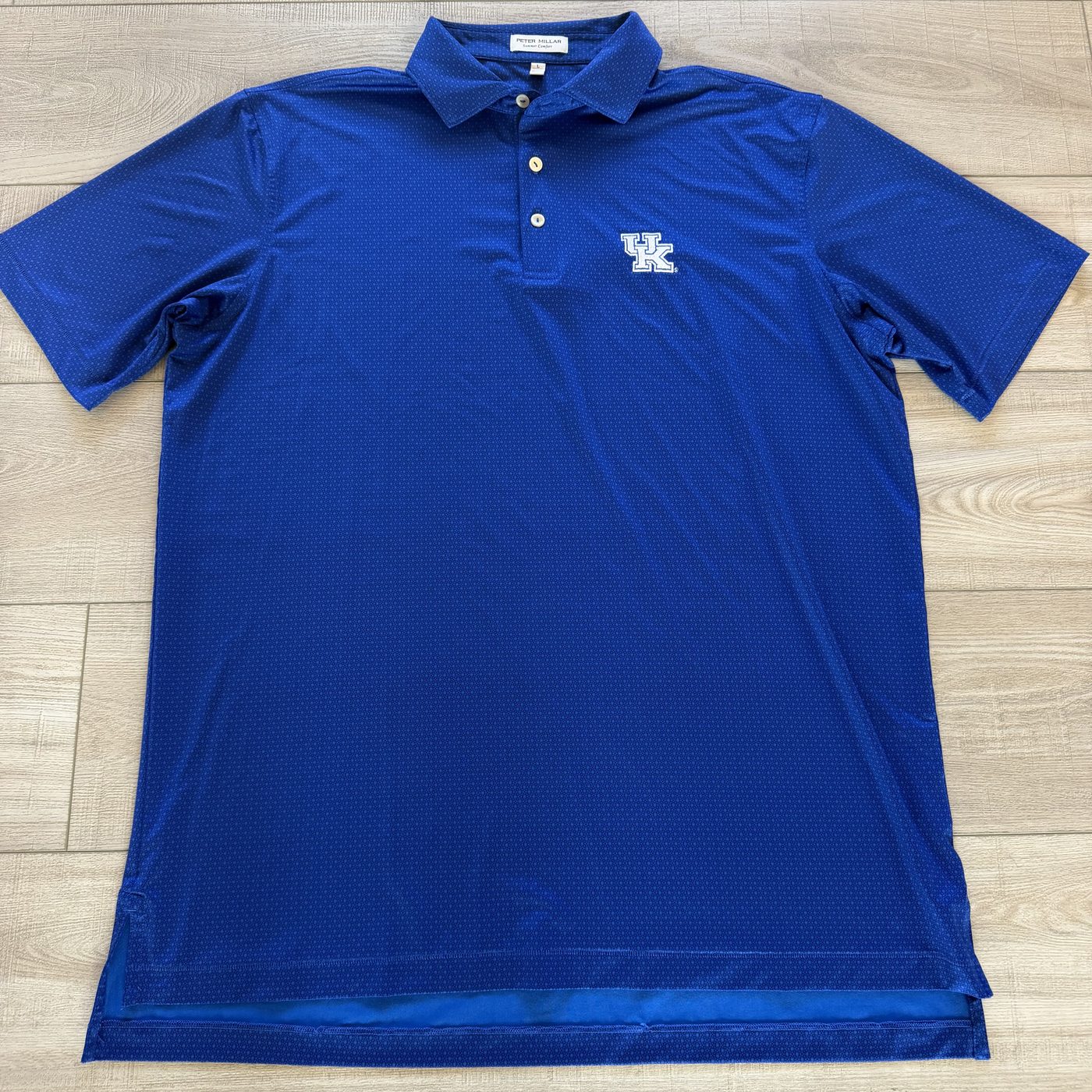
College logo golf polo resale value from a real eBay flip: a $5 thrifted Peter Millar Kentucky Wildcats polo listed at $49.99 and sold the same day for $40.
Fee estimated at 13.5 percent; eBay had not yet returned the exact figure.
Two polos can hang six inches apart on the same rack, carry the same brand on the neck tag, be the same condition, and be worth ten dollars apart from each other. The variable is a patch of embroidery about an inch wide on the left chest.
This royal blue one had a school on it. Five dollars in, forty out, and the order posted the day the listing went up.
What the shirt was
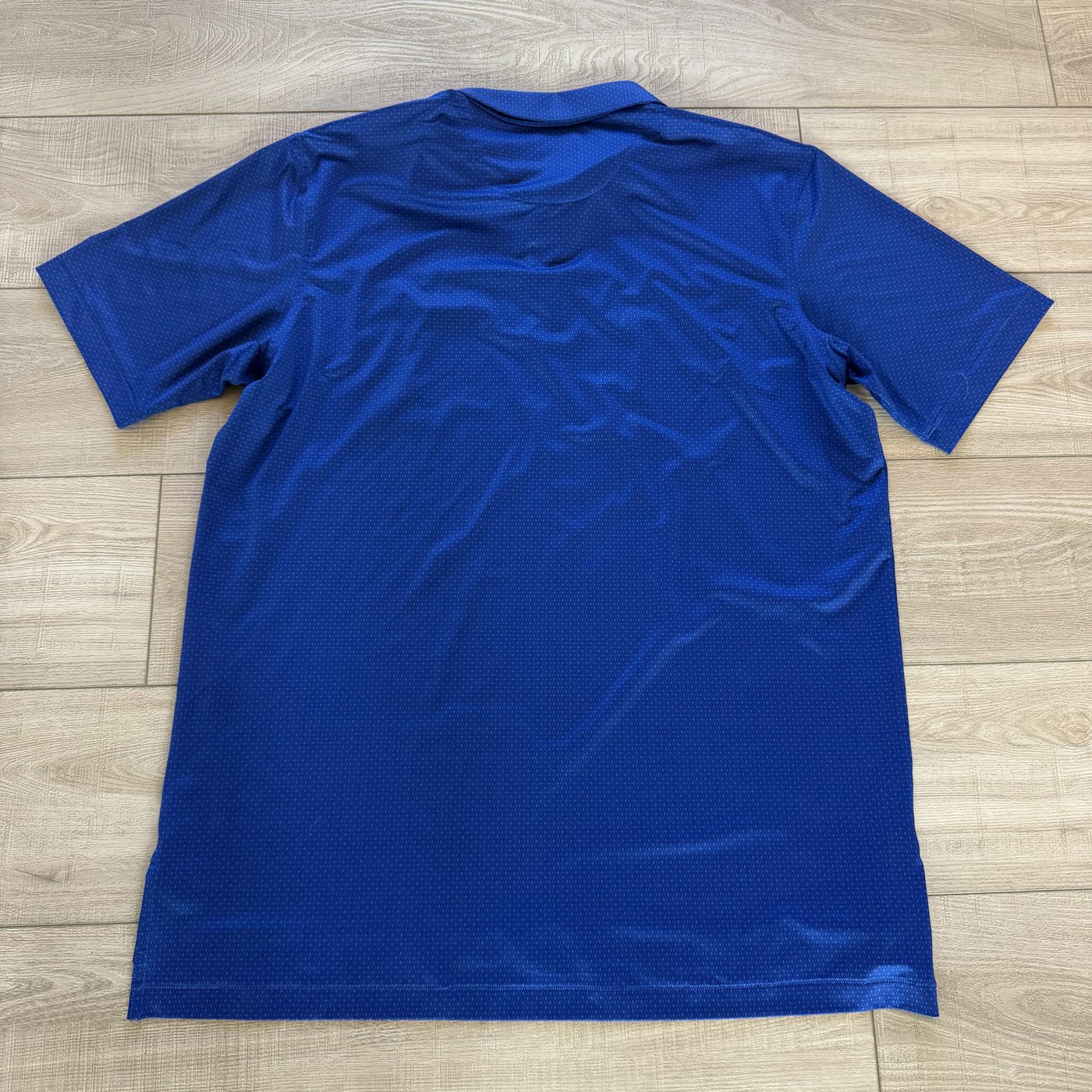
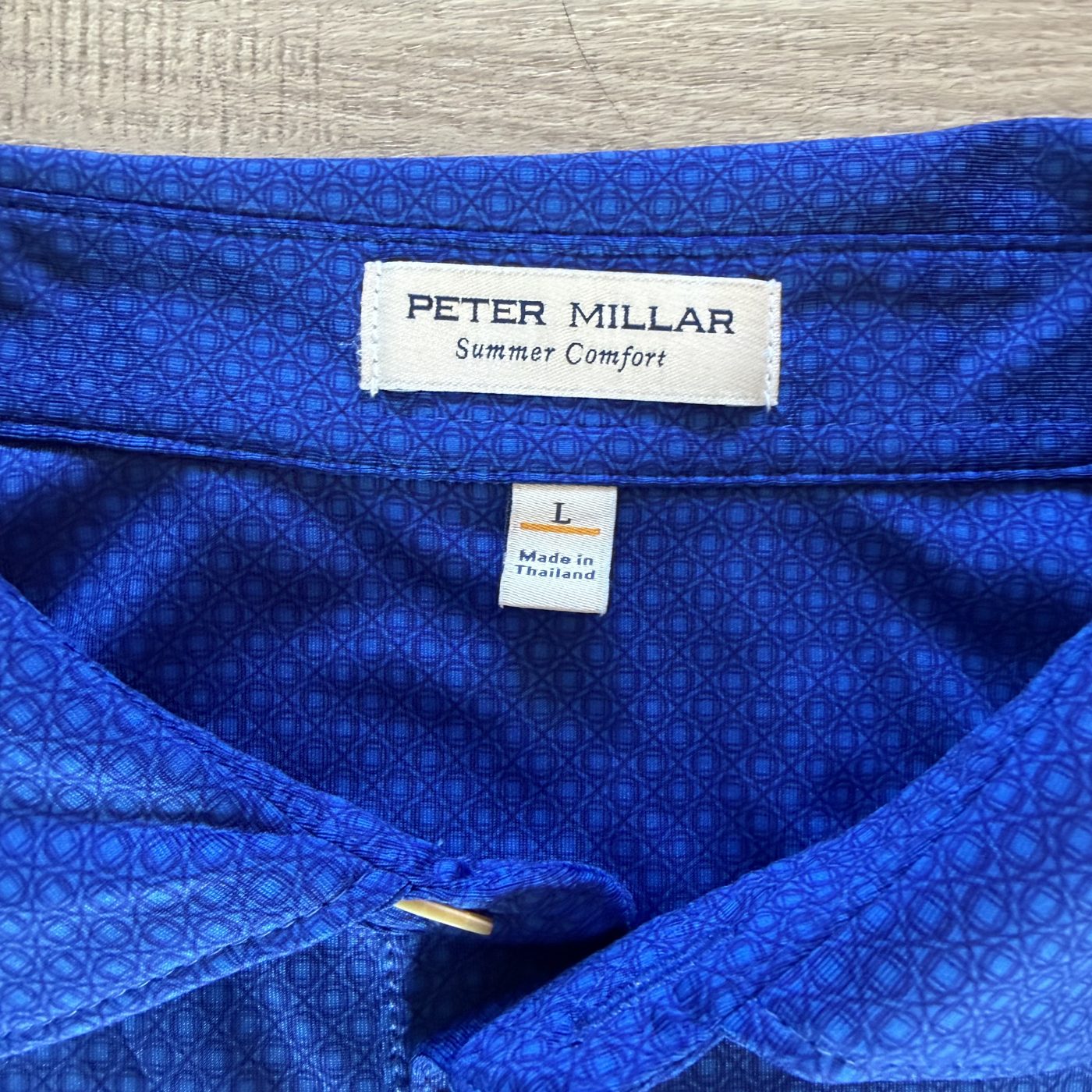
Look at the first photo. A Peter Millar Summer Comfort performance polo in royal blue, size large, with a tonal diamond micro print woven through the fabric so the shirt reads solid from a distance and textured up close. Three button placket with cream buttons, a self collar, side vents at the hem. The neck tag reads Peter Millar Summer Comfort, size L, made in Thailand.
The third photo is the part that matters. A white embroidered interlocking UK, the University of Kentucky mark, stitched on the left chest with a registered trademark symbol next to it. That symbol is the tell. Officially licensed college apparel carries it, and unlicensed fan merch usually does not.
Condition was used excellent. No holes, no stains, no pilling under the arms, embroidery tight with no pulls, and a collar still holding its shape.
The logo is the whole price difference
Before this one was listed, two comp searches were run against live eBay listings on September 5.
| Comp pool, active listings | Median all-in ask |
|---|---|
| Peter Millar polos, men's large, no team mark | $33.44 |
| Peter Millar Summer Comfort, large, Kentucky Wildcats | $66.00 |
The second search returned four listings, running from $40.00 to $92.00.
That is roughly double for the same brand, same size, same product line. The difference is that a plain Peter Millar polo competes against every other plain Peter Millar polo on the platform, while a Kentucky one is being hunted by a specific person who wants that school on that brand. Only a handful of those shirts exist for sale at any given moment, and the buyer is not browsing. They are searching the team name.
The licensed golf polo is the overlap of two separate buyer pools, the premium golf apparel buyer and the college fan, and you get to charge both.
Pricing off four listings is not pricing off data
Here is the honest limitation. There were no usable sold comps for this shirt, so the only numbers available were asking prices on unsold inventory, and there were four of them.
Four active listings is not a market, it is an anecdote. Asking prices are what sellers hope for, and the $92 one at the top of that range tells you nothing except that somebody is willing to wait a long time. A $66 median built from four hopeful sellers is a direction, not a destination.
So the shirt went up at $49.99 with free shipping and Best Offer turned on, which is about 24 percent under that active median. The thin sample was the reason to list under it rather than at it. When you cannot see what anybody actually paid, you give yourself a faster exit and let the offer button find the real number.
The numbers
| Line | Amount |
|---|---|
| Source cost | $5.00 |
| Listed | $49.99 |
| Sold | $40.00 |
| eBay fee, estimated at 13.5 percent | $5.40 |
| Profit | $29.60 |
Three things belong under that table.
The five dollars is a standing ceiling on thrifted clothing here, not a receipt for this specific shirt. Nothing in the category comes through the door above it, so every clothing flip on this site is booked at that figure.
The fee row is an estimate and it is labeled as one. eBay had not returned the exact final value fee on this order when these numbers were pulled, so the standard 13.5 percent is applied in the open rather than quietly smoothed into a nicer profit line.
Postage is not in the profit, because no label cost was recorded against the sale. One folded polo in a poly mailer is the cheapest thing in reselling to ship, but that cost still comes out of the $29.60 before the money is yours.
What the $40 actually proved
The licensed premium was real and it was smaller than the asks suggested.
A buyer took it at $40.00, which is above the $33.44 median ask on plain Peter Millar larges and well below the $66.00 median ask on the Kentucky ones. For a second reference point, a solid navy Peter Millar Summer Comfort polo in XL with a generic club crest sold here for $30.00 in August. Different size and different shirt, so it is a rough comparison rather than a controlled one, but the gap points the same direction the comps did.
The school logo was worth roughly ten dollars in real money. The four hopeful listings said it was worth thirty. Both of those statements can be printed because one came from a completed order and one came from asking prices, and the difference between those two kinds of number is most of what pricing is.
What to look for on the rack
Golf polos are the single most reliable clothing category in a thrift store because the buyer pool refills weekly and the shirts ship for almost nothing. The licensed ones are the upgrade on that trade.
Scan for the chest embroidery before you check the neck tag, because it is visible with the shirt still on the hanger. A school mark, a country club, a tournament, or a corporate logo all mean the shirt had a reason to exist beyond retail. Then flip the collar. If a premium golf label is sitting behind a licensed college mark, that is the combination worth the five dollars, and large and extra large move fastest in men's.
Two seconds of checking saves the bad buy. Run a thumb across the underarm for pilling, since performance polyester holds it and the camera finds it. Then look straight at the embroidery, because a lifting or cracked logo takes a licensed shirt straight back down to generic money.
The rule out of this flip is about which number you trust. Four people asking $66 is a rumor. One person paying $40 is the market.